Expert Lectures — Full Transcripts
Expert presentations with searchable full transcripts — expand below each video to read or search.
NF Summit 2026: We Are All Advocates - Catalyzing Experiences into Advocacy
Read full transcript
So when you think about advocacy, advocacy is essentially the act of um you know of I I I want to say I want to advocate It's the act of acting on someone else's behalf or on a community's behalf to make change, change of any kind, right? Whether that's a policy change or whether that is you as a patient with your provider advocating for um or sharing your experiences and how how can how can um you and the provider work together? Um and also individuals as patients. And what really struck me yesterday was the number of young people we have here and a lot of folks who um are under the age of 18 who will soon be bonafide adults and and how will you advocate for yourself? So we're going to have a sort of a full circle conversation. Um and uh so we'll get into it. I think um one of the things that I think would be really important for the young folks in the audience is that um when we were growing up there wasn't an internet. So, uh in case you didn't know, it wasn't around forever. And today, Saturday, so Saturday mornings were like the day that you got to wake up early and go watch television because there would be cartoons. Like there was no Nickelodeon, there was no Cartoon Network. This was like you had like four channels and one of them uh like you know was the one that you got to watch. So woke up every Saturday morning like super excited to go downstairs and watch my morning cartoons. And the way most of us learned our grammar whether it was adverbs, nouns, um articles or um uh all of these things was actually through this series called Schoolhouse Rock. So, I thought we would start by showing all of you how I learned about how the federal government works. Um, now I'm the chief patient advocate, which means my whole job is to work with the federal government on behalf of this community and many others. Um, so let's start with um again a little bit of a civics lesson. You sure got to climb a lot of steps to get to this capital building here in Washington. Well, I wonder who that sad little scrap of paper is. >> I'm just a bill. Yes, I'm only a bill. And I'm sitting here on Capitol Hill. Well, it's a long, long journey to the capital city. It's a long, long wait while I'm sitting in committee, but I know I'll be a law someday. At least I hope and pray that I will. But today I am still just a bill. >> Gee, Bill, you certainly have a lot of patience and courage. >> Well, I got this far. When I started, I wasn't even a bill. I was just an idea. Some folks back home decided they wanted a law passed. So, they called their local congressman and he said, "You're right. There ought to be a law." Then he sat down and rode me out and introduced me to Congress and I became a bill. And I'll remain a bill until they decide to make me a law. >> I'm just a bill. Yes, I'm only a bill and I got as far as Capitol Hill. Well, now I'm stuck in committee and I'll sit here and wait while a few key congressmen discuss and debate whether they should let me be alone. How I hope and pray that they will. But today I am still just a bill. Listen to those congressmen arguing. Is all that discussion and debate about you? >> Yeah, I'm one of the lucky ones. Most bills never even get this far. I hope they decide to report on me favorably. Otherwise, I may die. >> Die? >> Yeah, die in committee. Oh, but it looks like I'm going to live now. I go to the House of Representatives and they vote on me. >> If they vote yes, what happens? >> Then I go to the Senate and the whole thing starts all over again. >> Oh, no. >> Oh, yes. I'm just a bill. Yes, I'm only a bill. And if they vote for me on Capitol Hill, well then I'm off to the White House where I'll wait in a line with a lot of other bills for the president to sign. And if he signs me, then I'll be a law. How I hope and pray that he will. But today I am still just a bill. You mean even if the whole Congress says you should be a law, the president can still say no? >> Yes. That's called a veto. If the president vetos me, I have to go back to Congress and they vote on me again. And by that time, you're so >> By that time, it's very unlikely that you become a law. It's not easy to become a law, is it? >> No. But how I hope and pray that I will. But today, I am still just a bill. >> He signed your bill. Now you're a law. >> Oh yeah. I love that video. So, I guarantee that anybody in this audience, as I was born in 1971, anybody who's around that that time frame was singing along with it like I was, but you weren't miked, so you could probably sing out loud. Um, I just wanted to be careful that you you weren't exposed to my voice. So again, um that's a very simplified version of how federal policy um legislation is created, but really each of you has So let me back up for one second. I should say that video was developed in 1974. So, uh, the reference to he, congressman, I realize that that, um, things have definitely evolved and maybe Schoolhouse Rock will, uh, issue an updated version, but I just wanted to acknowledge that for, um, uh, folks in the audience that, uh, it was it was created in a very different time. But um the the each of you really has the opportunity whether it's by writing to your member of Congress, going to Capitol Hill with different coalitions that I know the NF community brings together. Um and and really that is policy advocacy. We'll circle back to that, but I want to start by talking about advocacy in the context of advocating for patients. And we're going to start with sort of the provider perspective since we have Dr. Lewis Hall here and then as we discuss a little bit more, we'll talk about your advocacy as a family member and and all of those things, but you know, talk to the audience a little bit about um sort of how you like how did you decide to become a physician and was advocating for the patient part of that decision? >> Um, absolutely. I've wanted to be a doctor since I was six. And um the the impetus for that was my father's brother, one year younger, was a paraplegic at the hands of a polio infection when he was 6 years old. And so um he moved in with us when I was born. And so I grew up seeing my parents take care of him, me taking care of him, and then falling in love with the health care providers that were providing care to him, the surgeon who um fused his spine so he could continue to walk on crutches, the primary care physician that dealt with all of the other um symptoms and issues that arise in someone that's paralyzed, and on and on and on. and you know I just couldn't imagine being anything else or doing anything else. So seeing advocacy at work um in understanding kind of the role of uh the patient, the family um and the entire healthc care community working together was an inspiration. >> Has it how has it evolved over over time? Well, I have to admit it was a rude awakening when I actually came into healthcare. Um, I had grown up with this stareyed notion of everything that's all um, you know, is uh, all wonderful and people were devoted and they were thorough and they talked to each other so they were aligned and all of that stuff. And then um I got into healthcare and realized that a lot of people had no access uh to information, no access to treatment, uh no treatments to have access to um and that there wasn't the kind of coordination >> that um I had been witnessed to when I was a little girl. And so there was a new kind of advocacy for me which was how do you work within a within an in you know within the healthcare industry or community to shape >> um in response to the needs of the people who are there like um and I used to get um a lot of feedback. my patients would say uh would teach me amazing lessons because I would um be telling them very scientific in things that I thought were very important and all of that and I would get a lot of down home wisdom from um people on the front lines. So my patients were my best teachers about um about advocacy and about what to advocate for cuz that's often the problem. >> Yeah. I I was so inspired this morning seeing um and I I am terrible with names, but the clinician of the year award and thinking about um you know how much you've advocated for patients over decades and and um you know when I was uh growing up I too wanted to be a physician um and I I majored in science, political science because that's real science. That's a that's a joke. Laugh. um uh uh and you know kind of had a circuitous route to getting into medicine and working in the industry but um you know I I worked in uh a ped pediatric practice uh through college and you know it's interesting because you see all different kinds of folks right different kinds of uh practitioners and and but I was always really impressed especially with pediatricians you know that they're always advocating for the patient or advocating, you know, and sometimes it's it's a struggle. We're seeing um you know, it a lot of uh advocacy is necessary in today's environment that maybe wasn't before around vaccines and some challenges certainly, but um what I'm hearing you say is that uh the physician didn't always know everything. >> Yes. Surprisingly. >> Wow. >> Because we often thought we did. But um the I'll give you an example of how I was led into some advocacy at certain points. Um if you think about diversity in clinical trials just as an example, I had a patient um when I was a medical student and um she was an 80year-old African-American woman and I had read all of the data on the disease that she had, the medications that were used, the dosing, the side effects, and all of that information. And I was being very uh confident about my knowledge in this >> and um so I was sharing it >> and then this this happened and then that that happened and this only happened in this percent of people and she reached across the table and touched my hand. She said, "Baby, you know, if it happens to me, it's 100%." >> Yeah. And it dawned on me that she would not have been in not one of the studies that I was referring to. That she would have probably been um excused or excluded from the study because of her age. Um you know women in um clinical trials was not necessarily a thing. Exactly. So these were things that I had taken for granted um from the data science perspective that I realized were not in her service at all. And so it's those moments that um patients tell you or family members tell you, you know, I appreciate your advocacy. I appreciate your information, but here's what I think I need. And so let's work together to figure out what I need. >> And then there's some of it that I can do >> to help make it so. There's some of it that you can do to help make it so, but together there's a lot of it that we can make it so. So being sure that you're aligned about what you actually want as an outcome as uh aligned across all of those affected. And I think that's one of the opportunities um that I've seen you from an NF perspective pursue that um when when I hear about your wins and your progress, I realized that it wasn't one person who had a great idea. >> Um it were many it was the input of many people, the synthesis of those ideas, the alignment of it, and then all hands on deck to make it happen. >> Yeah. So, I I'm going to I'm going to issue a notification now that we um I'll be talking to Dr. Lewis Hall about a couple of other things, but I really am going to turn things to the audience, ask anyone who's a clinician in the audience to talk about um you know, come up to a mic and and share about a time that you advocated for a patient or a patient educated you. Um you don't have to necessarily be um in the NF space. I know there are lots of clinicians out there. Um, and then what we're going to do is I'm going to turn it to the families and really ask you to share your stories of advocating um on behalf of folks in your family. Um, but just to warm things up in case we don't have a lot of volunteers right away. I'm going to ask uh Dr. Lewis Hall um if you don't mind to talk a little bit about how your role as an advocate has changed a bit over the last couple of years in particular and and how that how that has shaped your your thinking as a physician. >> So I think um two things have happened. One is um I spent a lot of time advocating what I'll call inside um trying to change the drug development paradigm trying to incre increase inclusion if there are ways that we can crunch if you would um the cost the time um etc as we're doing this. So, I spent a lot of time thinking about um in where I am right now in the industry, are there things that I can do um from a um from a rule or law standpoint, from a practice standpoint, are there changes that would be helpful that I could help facilitate and advocate for? And then lately I have found myself more um one one foot inside the uh community of drug development, diagnostics development, etc. and another foot in the space of um really understanding what I'm advocating for from the patients perspective. And I'd like to think that I was doing a really good job of that all along. But I've realized recently that um there there's much more >> that we can do to um pull what are your questions, what are your needs, what are the subtle differences that you as an individual are experiencing that may be addressed as opposed to the group think that we also um that we often also do when we're thinking about a group of people. So um all depression is not isn't the same. All NF is not the same. Every need of every family in every state is not the same. So beginning to >> understand the subtleties um to drive advocacy has really hit home for me >> um in a very different way >> in the last decade or so. >> Yeah. I think and so um I shared a little bit about this yesterday um that uh for those of you who didn't read her biographical sketch um Dr. Lewis Hall is like the Oprah of like medicine. Um she's uh really wellknown. Um so uh but I am fortunate enough that she's been a mentor for me um and really helped me advance in my career. So for me this is a really personal discussion. We have spent many Saturday mornings just chatting and you know I've appreciated you sharing about your your grandson African-American growing up living out in LA and and the considerations you have to make around you know if you get a speeding ticket. I mean things that just in today's world you've just been I don't know just like you're you're like my my favorite aunt and so I just wanted to share that and and I want you all to think of her in the same way. Um uh and then you can like you know go on YouTube and watch all her episodes with Dr. Phil and being on TV and all that stuff. But um you know I I think what I'd like to sort of see are there folks in the audience anybody who um wants to talk a little bit about sort of an advocacy experience on behalf of your patient or maybe a time when you you thought maybe you would have advocated differently. Is there anybody who wants to share anything like that? I think >> well can I add let me add one thing because uh we did the bill from an advocacy standpoint but there's so many other places that can as directly drive so there um their input valves if you would for the National Institutes of Health for example uh work in biomarkers and diagnostics and developing treatments um there's an opportunity the now in rare disease focus at the FDA where they realize that you know every kind of rule number one has an A B C and D that needs to be subtly different in order to address the needs in different therapeutic areas or for different diseases. So I think that there's the big capital A advocacy um from a bill to a law standpoint and but there are other um points of advocacy um that can become important and they can either kind of drift up >> um for greater inclusion or they can focus in on more specific adaptation um to be sure that in the unique weakness of the disease um the person's individual circumstances as much as we can we can focus on that and accommodated in the kind of rules that have been written the um processes that have been established. So, so I'll turn I'll I'll turn a little bit more to be sort of open things up a bit more and that is um uh what I've been so impressed. This is my first time attending summit and it's amazing. I I the energy here and the community is is incredible. I met a family uh yesterday. Both parents are physicians and and their daughter had gone to a summer camp and and still stays in touch with folks like on Zoom every single week. And it's like this is um this is an incredible community and NF related summer camp. So are there parents out there who want to either ask a question and I won't have the answer but somebody in the room will um or share an advocacy story again um of a journey that that uh you know that you really had to work toward or a challenge or a wonderful story on advocating on behalf of your family. Um, and if you don't mind just you could share your first name and and your sort of connection to the community. >> Um, I'll get things started. My name is Lydia. I live in Colorado. I have a 22year-old with NF1 and he has a related condition called Moyaoya, which is abnormal vascular vascularization of the brain. So he gets annual brain MRIs and even though we're in this amazing children's hospital at Colorado um every time he'd go in for an MRI I would this was a while ago right this is when he was younger so 15 years ago but they'd open up a paper file and look at stuff and and I was talking to anesthesiologists and and waiting for them to say we'll keep an eye on his blood pressure But it was the says it was the the the onus was on me as a parent to do that. And I thought, "Oh my god, I can't believe they can't get this right." I mean, but you know, it's oldfashioned. Now things have gone electronically. But I brought this up to the attention of the stroke doctor that we are seeing and he took it upon himself to go, you know, hospitalwide. So this is not um governmental advocacy but just internally within just the hospital to change that system. So immediately anybody with NF, anybody with immediately a red line comes up. These are things you need to keep out. Every time it comes in the hospital, the doctors immediately see that as an ident identifier. Whereas before they'd have to go through piles of paper to figure that out. So, that's just one personal experience that I thought I'd share with other people um >> to encourage you all to speak up even if it feels scary internally because it can trigger um change for a lot of people, not just NF patients, but all patients. >> Yeah. And think of the impact you've had on NF families. Everybody going to this hospital now has a pro they can trust that there's a protocol in place and that the your stroke doctor advocated for you. So like kudos to you. That's amazing. >> So my question for you is he's now 22 and adulting is hard as we've talked about a few times already, but from a parent's perspective, it's particularly hard. As soon as that child turns 18, immediately you're cut off from easy access to medical information and guiding your your your child, young adult into adulthood. And so much of NF is, like I said, has over the even last decade has evolved so much. There's so much information at this symposium versus the last one I attended when he was probably 8 years old. And my frustration is how do we guide our young adults to manage their process and be on top of all these things that are happening? Um, it's it's really I I guess scary for a parent of a young adult to really understand what pathway to put them on and how we can better advocate for some better scaffolding especially as they become adults. >> Thank you. >> Yeah, that's a it's a really insightful question. What what are folks in the room thinking about? What are there parents here who've been through that journey or or young adults who want to share their experience through that journey and offer some advice and support? Um folks have their hands up. Uh oh, great. Over here. >> Oh, we'll wait till you get a mic. >> What I was going to say is actually very closely tied to that. So, I guess I'll take my turn to speak. Um, hello. My name is Kylie and I am the NF patient. And everything that I learned about self, sorry, I'm trying to get emotional. >> It's okay. >> Everything that I learned about self- advocacy came from my amazing mom who's been my caregiver my whole life. And I'm very fortunate to have her here with me today. >> Love you. I think one of the hardest things that not only I had to face but also her being my support system is the fact that not only do I have NF but so does my brother and we inherited it from our father who unfortunately passed away when we were very young from cancer. So we were not only navigating a world where you know at the time in my childhood there was very little information understood about and the possible treatments but she was looking at all this from the outside. She had to step into this world of something she didn't understand. Something that you know she wanted to find these answers for so desperately and you know not wasn't always in a position to know where to look, how to find it. But she taught me through her own journey and lessons that she instilled in me very directly. We need to be loud. We need to be heard. You know, doctors know so much, but sometimes you have to know how to ask the right questions. And you need to not be afraid to go in there and say, you know, maybe I'm completely offkilter here, but what about this? What that effect? The treatment that I'm currently on, we only found out about because she was watching some Sunday morning broadcast and called me in, I want to say happy hysterics while I was in college, saying, "We need to look into this right now." because she kept asking questions and encouraging me to do the same. And it's been, as most of us will say, probably one of the wildest journeys that will never end, trying to get to a point where we can continue living and proud of, you know, everything we've done and continue living a life that we're happy to be in because we deserve that. And it doesn't happen unless you ask those questions. And you know, I'm going to be 25 next month and you know, I'm still calling her up saying, "Hey, what do you think of this? What do you think of that?" Aging out doesn't mean being on your own. Becoming an adult doesn't mean you lose your support system. It just means that it's there for you in a different way. It's not making your decisions, but they're guiding you and holding your hand when you need it. So, my most happy >> >> over here. We'll go back and let's go back and forth. >> Hello. >> Hi. >> Good morning. I'm looking at the screen. I'm sorry. >> I can't look at the screen. I can't deal with myself on camera. Sorry. >> One, a little off track here. But in reference to the question you were talking about, I when you were talking about things you seen on TV, I can go back even further than you. I can remember my morning show was Three Stooges. So that was a little different. But um when you talk about advocacy, what I learned with my daughter and her mother who was like in the forefront when we found out about this because quite honestly, I'm sure I'm not the only one that found out when you started talking about NF. I always remember when my daughter was a little girl, they would have what you guys call it, the ground rounds where all the doctors would come in to look at her. And I didn't quite understand what that was about because when they talked about NF, most doctors didn't really know much what I think, but every now and then we'd find somebody that knew knew something. Long story short, when we got to Angela got to be about what is it, maybe seven or eight, can't remember, but I was talking to Dr. Hall about this yesterday. She went to the NIH, some doctor had guided us to that said, "Well, maybe you should go down there. They have research cuz they did not have any answers." And just like some of the younger mothers and fathers that I'm hearing now, I've been doing this now for 34 years. Um, there was no answer. They would tell you, well, you'd ask those questions and they would say, we have to wait and see till puberty and my daughter's like 7 years old and figure why I got to worry about that. But long story short, we ended up going through and this comes back to the advocacy and she ended up in a trial for um I forget you know the medicine I'm talking about Dr. Hall >> Gley. >> Yes. She was one of the original people in the trial when she was seven about 8 to 12 and she did that for years. It go back every year back with the thing we talk about phase one and two. Fast forward about 20 30 years then later when it became an actual medication she filed to get a grant because the medication was very expensive and now she's taking the medication and her tumor has shrunk tremendously. So by her getting out there and helping and getting she's the beneficiary. That's all I want to say. >> Thank you so much for sharing that. Go this side of the room. >> Hi, my name is Kim and we're from Ohio. Um I think I agree 100% about the mom and transitioning. We're there. He's turned 18 and in the world of medicine, you turn 18 and he's going to solve all his problems that have been happening his whole life all on his own and manage all of his friends in his care team. And I'm going to be standing outside hoping and praying that it all works out really well. And that really doesn't happen because they're very overwhelmed. We're overwhelmed as parents and adults managing their care through their lifetime. So, um, what I learned was to give your child a voice early on. Start it at 8. You know, before that, started before that about how they feel when the doctor walks in the room and they start asking you questions. If your child can manage it with your encouragement, have them answer those questions. You're asking me how he's feeling, ask him how he's feeling. Ask him what he thinks. you know, as soon as they can verbalize it, you know, we talk to our kids about their feelings. We talk to them about all these things. Have them utilize it in that space. Also, teach them not to be afraid of their medical team because they can work in a collaborative way together. So, as they grow and they develop, they become more comfortable asking those questions way before they turn into adulthood. So, they've established that in their relationship with their physicians. and he would say to me, "What does Dr. Weiss think? What does he think?" And we were blessed to have him for 13 years, which doesn't really happen very often in your clinics, but we he would ask me and I would say, "This is what we're talking about." And you establish that, but you really get that rooted with them. Do I still help him navigate everything? 100%. I mean, you know, he's got seven to 10 doctors at home and in his clinic. So, um, but we manage it together. So little by little I started stepping back. Even like here I I stepped back a lot more and he's advocating more for himself and he's sharing his story. Eventually those kids it becomes their story and it becomes their advocacy and their voices. So we start at a young age especially the medical field. Do you mind sharing a little bit? I think just to to come to come full circle with to answer um I think Holly um uh what was the legal process so that you could continue to support the navigation? What did you have to do in order to see records after your child turned 18? >> He had to sign paperwork. So the first thing we did was before he turned 18, I talked to his neuroncologist and the two big questions was how long can we stay at the children's hospital? So he sees a regular PCP and all all the friends at home, right? But this clinic has they're on the forefront. I mean, they worked hard with NIH and all of the things. And so, um, how long can he stay in his department? He can stay forever. um like surgically and all the other things he would have to go to a grown hospital, you know, regular hospital, but within his care team, he can stay at um we go to Cincinnati Children's, he can stay there as long as they they let him. Um and he wants to because as we also know, there's not a ton of clinics and a ton of things set up for adults. So the fear of leaving your security is huge. um and having the same level of care and insight that you have within the the pediatric world. So that was the first question I had. And the next question was we were concerned about he's like I need my mom to see my chart because up until then I could see my chart and I would get all the information and then all of a sudden you're done. And actually that happened at 14. At 14 he had to give me permission to have access to my chart and then once again at 18 he had to give me permission. So they it it's a whole thing and it's very alarming. At first I was like at 14 I was shut off and I was like what he's 14 and here's the thing at you I don't still carry his insurance till he's 26. So I'm like but I have nothing. So um those were the questions and his doctor steer us in the right direction. You know, if you have major concerns, there's patient advocates and there's also social work that will help you navigate those things too within the realm of the department you're in in the hospital. And don't be afraid to ask. That's the biggest thing is go in with your questions before you get there because they have limited amount of time, but you're not leaving until you answer my questions because that's just how it is. and I drove two hours and we're here and like I told the one doctor I said listen I appreciate you and your knowledge base to you he's patient 1,185 >> to me he's my number one so here are my questions and just I just need answers the best that you can and if you don't have them then we need to figure out how we're going to get them and I think when you go in with a plan your physicians respect you as a parent and they know that you're not going to go rogue and you're not this crazy parent and you're like you have a plan and they will work with you and if you don't then you need to find the ones that do because this is your life your child your this is it. So, and like I told him, I said, "God, I hope when I prayed, I made really good decisions as you were growing up. And if I didn't, I'm sorry, but I did the best I could with the knowledge that I had at the time." And as parents, we have to remember that we're doing the best we can with what we have. >> Thanks so much for sharing that. Hi. Um to the mom that was that has a son with moya moya. My son has moaoya and my daughter has and also so all three of us have it and they're both adults. And the form that we filled out was medical power of attorney so that I can legally talk to their doctors with them there or without them there and make their appointments. And um they both signed that at 18 um so that I could help them. And I think that getting that form signed, the kid can revoke your they're adults, but they're my kids uh can revoke it at any time if they feel like you're overstepping, but I think that it is a good form to fill out. You have to have it notorized and then you just share it with doctors and it's, you know, a legal document that helps you have access to your kids medical, including insurance, everything that medically that they need. So, it's a medical power of attorney. You can print it online and have it notorized and share it with your kids, your adults, children's doctors. >> That's great advice. Thank you for sharing that with everyone. testing. >> Oh, there we go. My name is Vincent Co. I am a newer NF1 parent, so just getting up to speed. Uh, but I wanted to share a story about advocacy um from another disease. So, uh, I am a father to a daughter with congenital kidney disease and I run another patient foundation. And so it all started with me asking why there were not enough therapies in in pediatrics for congenal kidney disease. And uh at first I was scared and every single time I was scared. I would just look at my phone and remember my why. I think everyone in this room has their why. For a lot of people it's it's children. And so I just started knocking on doors. Started with the lowle not low level like local doctors then uh national doctors uh eventually NIH and FDA just kept on knocking on doors and asking why there weren't therapies. Um and along that way built allies and eventually that culminated in uh all those stakeholders uh for two days at the FDA working on therapies for hopefully my daughter and families like mine. And so just not taking no for an answer. Uh but I guess my question would be how can NF1 families participate in that advocacy at that high level? Obviously, we have, you know, huge quarterbacks like Annette, uh, you know, banging on doors, too. But how can we support her and make sure that we are there at that like top level, Alevel FDA, NIH, uh, advocacy level? Well, I I think that the question is um is answered in many ways, but I'll start with um the first thing is finding out what you need and what you want advocated for. Again, I think that one of the big challenges in advocacy is getting an agreement on what we're trying to get done by when and why. Um so I think one is providing your feedback to the organization that you know these are critical issues perhaps um they're not as high on the priority list. Is there a way to get those uh pushed up? Is one of the ways to get those pushed up by having additional participation from a group that is uh especially focused on this one issue or effort. And I know that NF has a lot of powerhouses that are on the ground doing the work every day. But I think one of the big opportunities is then to be sure that you've I don't want to use the word volunteer although I know you you know everyone volunteers um to make yourself available and make it known that you were available especially around one or two issues or um to essentially raise your hand. Um, I saw Annette, you know, nodding and others, um, you know, let us know that you're here. If you have a particular interest, what is that? Um, if you're looking to define a particular interest, like what the greatest need might be, then, you know, that's another part of the conversation and I think there's a a great opportunity and I let me can I use the conversation thanks to everybody for sharing your incredible stories. Um, one of the challenges in aging up is that you're also aging out. Um, and no one wants that to be the case, right? Young people have um, had the support of their family um, and medical team and the fact that they're aging out of the pediatric space and into the adult space and that their parents no longer have access to their records and they have to give permissions and all of that stuff. But I was sitting here thinking, I don't think I've ever seen material that says, "This is what you're going to face when your child turns a certain age. These are the documents you're likely to have to sign. These are the challenges that you're going to meet when your child reaches this age and then that age and then the other age. Here are the questions that you should ask um as that time approaches so that you know if there any uniqueness if there's any uniqueness in the system that you're in that you need to deal with and what are some of the general things and I kept I I was sitting here thinking have I ever seen that. Does CTF have any resources to that end that you know of or >> not specifically to that we do have a number of guys like >> but I think we've just advocated >> and we have helps honestly so when people reach out and have those challenges we direct them to Kate who gives them advice but that's actually a really good idea very >> so so I would just sitting here and I don't know that that's the direct it's not the direct answer to your question but just sitting here in the room together hearing the challenges and how they've been met and then pausing for a second and asking ourselves >> what needs to be done to make that smoother, better, easier for families that um are going to face that. >> So how do we you know so >> can exactly >> so can I ask a quick question? So first of all, yes, we we're collaborating with the NF collective actually, which is another group of many NF organizations that came together and we're part of that as well on transitioning into adult. So I don't know exactly if these things that you guys mentioned are in there, but it's definitely part of that program. Here's my question. Is there an organization because as you guys know, I love copying what other people's are doing. Well, is there an organization that you guys are aware of that has done this really well that we could call up and say, can we replace your disease by neurop fibromyitosis and >> I do have a couple of examples but first I do want to answer your question about engaging at the highest levels. Most of the institutes within the national institutes of health have some kind of a stakeholder engagement process. So, NIDK has one. Um, NINDDS has a really robust one. So, you can look online for the stakeholder engagement office or um uh or reach out to like the information desk. I'll give you my card. You can ask me and I'm happy to try to connect you. But each of the institutes does have this. Um and it's it these have they started actually NIMH was the first institute to have it the mental health community and that's where um I worked for many years as did Dr. Lewis Hall um and that really uh that's become a a quarterly event and I know that may sound like really formulaic but it is an opportunity um so we can talk offline about that if that's helpful. >> Awesome. Thank you. >> Yeah. And then going back to the um aging up question years ago, AAP had that American Academy of Child and Adolescent Psychiatry. I don't know if they still do. Um but but um if someone can make that note so that I can follow up on that, I will. I don't know how to do that on my iPad. >> But I I'll just say for me as I sat here and listened to you, I was trying to think of who had done this exceptionally well. And I think there may be some things out there, but there this may be a space not just from an NF community perspective, but this may really answer a question for a lot of um families that are are likely to face this across a spectrum of diseases. >> Yeah. And I will add and this is this is exactly why we hold this event to hear this feedback to help us develop these materials. We do have if you go to our website ctf.org/education, /education. We do have materials for the leadup including some transition documents. But I also wanted to say was that we have actually done FDA listening sessions. So we do have interactivity at the FDA at the NIH and that meets regularly with the folks at the NIH and others on our panels as well. So if you have ideas, bring them to us. We'll certainly make sure we're there and we bring you there. So that's the way to go. >> Hi, my name is Amanda Orth. Um, I am a parent to Audrey Orth who is 5 years old with NF1. And something I wanted to bring up in terms of advocacy is advocating for us as parents and caregivers. Um, so being a parent and a caregiver is hard regardless of what you're going through. Um, I went through my own mental health journey a few years ago, learning how to cope with my daughter's diagnosis and not blame myself. So, I really just wanted to take a moment and acknowledge all of us for all that we're doing to take care of our kids. um whoever it is in our lives and just make sure that you are getting the resources and the help that you need to because it's very important for us as the parents and caregivers to take care of us so we can take care of our kids. >> That's such an important reminder. >> It it is and it's a notorious challenge um for caregivers that are um have often taken an unselfish stand. So everything they do is about the person that they're caring for or the people that they're caring for and they're not dealing with um their own um opportunities for self-care whether it's you know just a daytoday do I get a chance to uh take a walk to stay healthy or um you know I'm just kind of eating anything because who's got time to figure out my nutritional needs when I'm dealing with someone else's. So, um I think this is a a huge opportunity um because um I'm a caregiver myself. My husband has a very serious um illness and um disability and I'm always, you know, checking my phone and thinking about what should happen. And um true a true story, I was sitting, we were in our doctor's office and he was looking at me um but he was talking to my husband. and he was saying, "Yeah, we really need to get her to start taking care of herself." And they were talking to each other. I was like, "Hello, I'm I'm sitting right here." And they just completely ignored me and were talking to each other about how I wasn't doing all the things that I needed to do to take care of myself. And they really needed to address that since apparently I wasn't going to, you know, that kind of thing. So, I think we're notorious as caregivers >> um for not taking care of ourselves because we have a first priority that is not us. Um but we all also know that um you can't give care if you know you yourself are not in the shape to do so. So um and I know that the caregiving discussions here are strong >> and the support is is good. So um it sounds like you're in the the right place and your story is very meaningful for um inspiring others to um take care of themselves so they can take care of >> and courageous. I mean, so thank you for like sharing that and I I would every if you aren't familiar with the term respit, get familiar with it. Um, there are many many nonprofit organizations around the country. You can go to the National Alliance for Caregiving at caregiving.org and they have a list of regional and local caregiving organizations, many of which do support respit care, whether that is through volunteer volunteer services. Um, there was a foundation actually exhibiting here and I don't know if they're still here. Um, I got a hat from them. They have financial assistance for like family vacations and things like that again. So, um, uh, definitely it's super easy to say take care of yourself first. But the thing that always comes to mind I always think about like, you know, when you're on the airplane and it's like put your put your mask on before helping others and then the kid is like there like not breathing and whatever and you're just like, but you have to do that. You have to like put your mask on first. Um and and so thank you for being courageous and sharing your story with us. It's really much appreciated. Thank you. And I wish um Dr. Lististeric and his team were the first ones to identify that I uh was in need of some assistance. So I just want to thank Dr. Listister and everyone at Lies for >> Hey, I'm Miranda McManis. I'm a patient advocate and I'm also a molecular geneticist. So I kind of have my feet in both worlds. Um and I wanted to speak to what other people said. So talking about the transition, there are places that are doing it better than others. So for CTF, um seek out the clinics and NF Midwest I think has done a good bit with this working with the NF collective as well. So definitely try to to reach out to those in the local community poll for that because and it needs to start early, right? think at 12, not at 16, because there's a process and you've got to start getting your child equipped for that as well. Um, but other than that, as far as getting involved, and this is to everybody in the room to Vincent there, there is a place for you with whatever you're comfortable with. You just have to talk to people. If you see a presentation and it's interesting and you want to know how you can help, ask. If there's not a place, try to make a place. CTF is great about helping you make a place. There's other NF organizations that are great at that. Just be willing to speak and that's all it takes. There's there's stuff at every level at the highest levels. They mentioned FDA listening sessions. I've done those. We've got an organization reigns that works on clinical trial and points and FDA people are at the meeting. If you go on those listening sessions, look at who comes to the calls and who is interested and look up their email. It's out there. There are ways to get involved. You just have to want to do it. And the way that you figure out what you want to do is by talking to the people around you. That's it. >> Thanks for sharing that. >> Hello, my name is Helen. Um I'm a first timer um here at the event. and I am from Colorado. I have a daughter who has NF who is who's fully grown. I did not find out I had NF until I was 18 and I went to join the military and a doctor found that I had NF. And back when I was 18, nobody ever heard of it. My own pediatrician who I saw till I was 18 never saw that I had NF. And now I'm my own self- advocate as I moved into Colorado. I've been here six years. Seemed the same pediatrician, not pediatrician, regular doctor follow me with NF. And I was like, I need to research this more. I need someone to look more into depth with me. And it took 2 years for me to get into a clinic here in in Aurora. So now that I'm in this clinic, they said, "You're in here now, you'll be in here for good." So I've had to self- advocate for myself for four years just to be able to be seen at the neurology oncology clinic. Well, congratulations on that because the tenacity and the bravery um that it requires to just keep pounding on a system that um is often unresponsive um is is really important and um and is a model because in many cases um unless you're pounding well maybe not pounding on door knocking down the door is uh is sometimes the way to go. One of the things that um you're bringing up that I've heard way too many times over the last couple of days is uh the delay in diagnosis and we're talking a lot about um treatment here and um you know what is the cure, what is the treatment and researching that. But one of the questions is um what can we do to improve the diagnosis? Um, do you have to be do you have to have access to a specialty clinic um and have the kind of courage that you displayed in, you know, pushing until you got your answer? or is there something that we could do to um make the recognition and the diagnosis um I hate to use the word easier but um more accessible >> and um to occur on a more regular basis and that I don't if there's anyone that has been kind of thinking about the diagnostic end of it and um thinking about how to speed it I would love to talk to you about what you um have seen uh what may be on the horizon and if there's anything we might be able to do to facilitate. Yeah, actually I think that's a really important point, Freda. So, I'm jumping in line just to quickly share um that there's been some really important work that CTF has helped to lead, but really through the leadership and brilliance of clinicians in the community um to update and think deeply about the diagnostic process and also um just a few years ago there was um some some changes that were made to improve that process and the understanding of it. But I'll also say that just at our NF conference a week ago here in Denver, listened to a great talk from one of our clinicians talking about the complexities in this case specifically of diagnosing non-NF2 schwanuanomattosis. And so it's an ongoing work because even the clinicians in the room hearing that talk were like, "Oh my gosh." like so it's an ongoing commitment from our clinical community to really understand not only how to make these appropriate diagnoses but then to disseminate that beyond the specialty centers out into the community health care systems where you know I know when I was a nurse in an NF clinic I did training with the nurse residents every single year to tell them all about NF because sometimes it's a nurse who notices this kid's got a lot of birth marks but they're here because you know they have you know roto virus they're in the hospital for something else. So I just wanted to say an absolutely a round of applause for the commitment to advocating for yourself. >> Yeah. And hopefully you'll connect with other folks here um as a first- timer. I hope you do connect with other folks here. Um >> we're the last question because we're almost at time and uh hopefully some close. >> Sorry cut you off. Were you saying something? >> I am Steve Sheer. Uh I know a fair number of you. I am one of nine people in my family with NF in the middle generation. Also not diagnosed until I was in my 30s. My daughter was the first diagnosed on this journey managing NF. We had to learn a lot about self- advocacy and my own journey led to my becoming a board certified patient advocate and I am a currently an NF patient navigator at Massachusetts General Hospital working on the my NF guide project and also staff at Brainy Ridge where we run the summer camp program for kids with NF. And one of the things we've seen is what you were talking about is that navigating the transition from pediatric to adult care is a huge problem and it's a huge challenge and there are some excellent resources available now and in fact we received a grant from Springworks to work on this and so if you are interested in resources please feel free to stop by our table. We have the model for how to do a transition in care available uh drawn heavily from got transitions which if you're not familiar with that is available free on the internet and it's an excellent resource. NF collective also has some very good material on this and you know it's the preparation for transition and care is a lot like learning to read. We can't hand an 18-year-old a college textbook and expect them to read it unless we taught them the alphabet. >> And that process really starts in childhood and teaching children at a developmentally appropriate level what their condition is and how to start talking to their care team and opening their mouth and saying anything at all to the doctor to get them comfortable with speaking in their own voice is a vital part of that. And so if you're interested in resources, please feel free to stop by our table and see. We have some stuff available that might help you and can certainly refer you to other resources. >> Thanks so much for sharing that. >> Absolutely. So uh we'll close now, but again coming full circle, we are all advocates. That's the title of our our presentation or our discussion today. um not just policy advocacy what we kicked off with but we've heard from so many parents um people living with NF um and again uh you know from you and and your wisdom. So uh round of applause for all of you for being part of this discussion and for continuing to be such strong advocates. And I I just want to give a a last compliment which is um one of the things I hear here is um a lot of listening. So this the sharing of the stories I think is very important. The sharing of your information, your wisdom, your access um and your advocacy is also very important. But the community that you have is novel. And Annette is also always asking, is there a really good model for this and a really good model for that that we could learn from? And I want to congratulate you because you were an amazing model of what building a community that is um resourceful and productive and all of the everything. And um just watching you all interact with each other has been um an honor and a joy. and thank you for having me with you. >> Thank you. >> Yeah, a huge thank you. I completely agree with everything. And I just want to quickly say that um this has been really inspiring for me as the person who's been planning this event for a long time. And what I'm noticing is that by having the two of you up here and just inviting people to share stories, to ask questions, I can see the learning, you know, that's bouncing back and forth. And I actually had a staff member said, "Go get Steven Sheared because they're asking about transition and Steven is a great resource." And I just so I love that and it was wonderful. So thank you to the both of you for for leading this conversation. I really appreciate it. Yeah.
NF Summit 2024: How We Study Pain in Neurofibromatosis and Schwannomatosis
Read full transcript
great so you can hear me um thank you for the invitation to be here thank you to the organizers and to see so many friends here uh this is really a wonderful opportunity for all of us researchers and investigators to be here so thank you for being around I was asked today to talk about studying pain in neurofibromatosis and schwannomatosis and you'll note that I added the word chronic I'm really not going to talk about acute pain this is the pain that happens over months and years of somebody's life and I think that's more relevant for our discussion today here are my disclosures of some of the things that I work on and so I I think we should start with a question of what is pain and of course we all have a an understanding of what pain is but there are formal definitions of what's pain so pain is defined by the International Academy of pain as an unpleasant sensory or emotional experience associated with or resembling that associated with with actual or potential tissue damage but I forgot to acknowledge somebody important where's andrees lesing help me with this there he is so I I just want to acknowledge that in an attempt to pull this talk together and make sure it's accessible I very much appreciated Andre's help in doing so so pain is an unpleasant sensory or emotional experience and there are some key things to know about pain and I think all of you will probably uh already understand this it's something that each person feels differently and it's affected by bi ology by your thoughts and social factors to various extents feeling pain and sensing harmful stimula are not the same thing just because you're activating the sensory nervous system doesn't mean that somebody is necessarily in pain and this really is highlighting the subjective experience we all have uh with pain throughout different life experiences we all learn how to cope with pain and this concept of pain and we do so in different ways now one thing that's important for all of us to know and I and I'm I'm sure we agree on this is that somebody's uh report of uh pain should be respected and one thing I hear so much in clinic is I'll see somebody who looks great they come in they're well dressed they they look fine and they're in terrible pain and there's this this difference between how they feel and how the world perceives them and often that leads people to feel that they're not being listened to when they say they're in a lot of pain pain and although pain serves an Adaptive role that is it helps us cope with things it also had has adverse effects on function as well as our psychological and social well-being and of course we'll try to capture that and then there's the description of pain how you feel are you in pain is one of several behaviors that show that but you can look at how people act and what they experience uh and and there are other ways of of understanding and recognizing pain and so just to continue on with some basic definitions um we think of different types of pain and this has implications for the medicines that we sometimes choose to offer people so when we think about pain that is due to actual or threatened damage to non nerve cells non-neural tissue or from The receptors in these non nervous Sy uh nervous tissues we call that nociceptive pain pain that comes from actual or threatened Dage to the nervous system we call neuropathic pain and more recently we've been talking about a third type of pain called no noop plastic pain and I'll be honest with you I'm just learning about this this is not something that was even really well understood when I was going through training and that's pain that comes from neither one of these mechanisms and I think this really highlights we don't just think about pain we want to know what's causing the pain as we think about the mechanism so that we can treat it better and I've shown you here two examples one of a sunburn I think of that as being uh as that of being no susceptive pain that's not due to the nerves that's inflammation and tissue damage and then if anybody here is lucky like me and and has had uh um herp exhauster before you know when you have reactivation of the of the chickenpox virus along the nerves that's classic neuropathic pain and that's an example from below so pain can take and if you have questions please raise your hand in the middle that that doesn't bother me at all um but pain um that uh pain comes with in different forms and flavors and and if anybody here has chronic pain I'm sure they could add to some of these descriptions we think if you have a a a a sensory stimulus that normally doesn't hurt let's say putting on gloves but that causes pain we call that aspect of pain Alodia pain that is worse uh pain as stimulus that should provoke pain but is much worse in a person we think of that as hyperalgesia and again what you see is wrestling with these different experiences because they they begin to uh um Express the different reasons people have pain and one last thing to to really appreciate is the role of the central nervous system not the nerves but also the brain the spinal cord where the processing of the pain experience is happening and we know that over time this process called Central sensitization can occur that is uh painful stimuli can become perceived is more painful over time as there's adaptations in the brain and in the spinal cord now some people love graphs I like graphs you may not so this is for the people in the audience who likes graphs uh what you can see here is if this is a stimulus intensity so as you get to the right something is more and more intense so imagine somebody just like lightly pinching your finger then harder pinching your finger then really hard pinching your finger and this is how you experience the pain you can see in in a person who has normal pain sensitivity you can see when it starts low you can see the when the stimulus is low not much pain but as you increase the stimulus you get more pain intensity and then we think about this idea of when you get an injury it can lower your pain threshold that's kind of the terms we use you know colloquially um and you can see this idea of aloan Alesia aladia which are Sensations that normally wouldn't cause pain can cause pain in somebody and also the hyperalgesia which is you feel it more significantly than you would normally so what are the consequences of chronic pain so we know of course as I alluded to in the very beginning that this can interfere with all of our normal activities whether it's work whether it's family obligations whether it's self-care and something that I see so commonly as a clinician is when somebody has chronic pain what I say is everybody with chronic pain has depression I think it's virtually Universal the number as I saw was 35% so as a clinician I don't believe that but I'm just reporting what I see in the literature and I would say the same for anxiety I don't know anybody who has severe chronic pain who lives without anxiety maybe you exist maybe you're one of the fortunate people but I would say these are consequences that come from having chronic pain furthermore my own experience and I didn't look this up in in the literature review is that this is an example of the Vicious Cycle as opposed to The Virtuous cycle the Vicious Cycle goes like this you have chronic pain it makes you depressed being depressed makes you more sensitive to to pain and they just reinforce each other the same is true of anxiety so these are some of the terrible challenges people face with chronic pain and I wanted to review with you different types of pain medicines that are out there and what I what you can see here is I've tried to highlight what we think the mechanism that this type of pain medicine addresses uh what what type of pain it works on some of the examples of those medicines and whether it's disease specific so I'll start with anti-inflammatories these are medicines like aspirin or ibuprofen or steroids we think they're treating inflammation and that is what we would typically think about as being no acceptive pain and these are not really disease specific this is just a generic way to treat any type of inflammatory pain the second column has to do with neuropathic pain medicines these are that we think are working on the nerve cells to stabilize them and make them less susceptible to stimulation common ones are Gabapentin also known as Neurontin pregabalin also known as uh that's not is that lria lria and then delatine which I think is symbola those are examples and these medicines can have non-pain mechanisms they're used for depression they're used for epilepsy they're used for other things again not very disease specific these are stabilizing nerve membranes and other things the third column is the column that's a no no for doctors like me now and it really highlights to me what a sad sad place we are so op opioids great medicines in that they bind opioid receptors which are receptors all of us have in our body they work on both ner all types of pain really morphine diloted fenil uh not disease specific I am old enough to have put many of my schwannomatosis and other patients on long-term uh um medicines we all know how that turned out um and it's very hard when there's not many options and so what I see now is the stigma where we can barely prescribe these medicines now for people with chronic pain and and we're really caught both I think as patients and as clinicians between a rock and a hard spot on one hand none of us want to addict anybody to a harmful substance but when we have people whose pain is not responding other medicines it's really challenging and I wish I could tell you I had the answer to that but one thing I hate is the stigma of of we do still have many patients who require opioids to get through the day and then finally the fourth column which is the column that I hope to to bring our expertise to or what I call targeted pain medicines these are pain medicines that we hope are going to act on a very narrow type of protein or other parts of a pathway that allow you to treat pain specific for that disease and that's really the the what we're all shooting for is not these non-specific drugs but ones that are targeted to specific diseases so here are some of the clinical manifestations both NF1 and schwannomatosis that can cause pain I won't go through them what it highlights is a number of tumors whether they're neurofibromas or schomas or if you look here whoops not there if you look here you can see some of the orthopedic issues like derasa or scoliosis that can cause pain and here is a a wonderful manuscript uh that was uh published in 2019 that goes go through NF1 and tries to capture some of the conditions that cause pain in NF1 and if you look closely what you'll see is that in the review of the literature predominantly in NF1 pain is caused by either orthopedic problems that is bone problems most commonly scoliosis and dur Alasia or by tumors those are the two most common cause now someone had come up to me before and said I have pain all over we'll get to that um sometimes we have pain that we can't easily ascribe to a single thing that's the real Bugaboo and a and a major problem here are um some of the uh here are some of I won't go through these details I'm sorry so I'll just go to schwannomatosis now so that was NF1 now I'll talk about schwannomatosis uh and predominantly here I'm talking about non nf2 related schwannomatosis so we is not nf2 related so in non nf2 related schwannomatosis up to 70% of people have chronic pain and about a third are unable to work because of that chronic pain so I consider non nf2 related Schwan atosis to be on one hand a tumor syndrome but on the other hand a chronic pain syndrome uh and we have looked at the relationship between tumor burden how much tumor you have and how much pain there's a very weak relationship and so as a physician entering the field you have a very concrete understanding you say well Whoever has more tumors have more pain and if I remove that tumor they'll get better and it turns out that that logic is flawed and just not true and so we've been looking for ways to understand how can somebody with few or no tumors on MRI have terrible pain and how can it be that I operate on a tumor it goes away but their pain maybe is gone for a short time but comes back and so one of the theories just to let you know is that people who have schwannomatosis have micr lesions and if you look on the MRIs on the right the these are studies done in Germany where they did very ultra high resolution MRI scans and they can show these tiny Schwan Omas that we can't see on regular MRI scans and so one of the theories is that a a large number of microscopic schwannomas are disrupting the normal nerve function and that's what causes pain and schwannomatosis our own data from Mass General Hospital is pointing to the key role of inflammation and this idea that by having these genetic variants that your body is susceptible for inflammation through your nerves and and the spinal cord and it doesn't have to be one or the other it can be both and one of the the unusual things about non nf2 related schwannomatosis is that patients complain of no acceptive pain and neuropathic pain even though we've been trying to understand if you have a nerve lesion you should have nerve pain and and that might partly be explained by the basis of this inflammation and so people always want to know well what's worse is NF1 worse or nf2 and of course there's no answer to that we're all individuals and they're all troubling in their own way here is some just information on pain intensity that's self-reported by individuals who have NF1 nf2 related schwannomatosis and non nf2 related schwannomatosis the higher the pain intensity score the worse pain reported and it gives you some idea here of where these individuals reported and then pain interference as I'll talk about shortly is how much does pain interfere with your ability to do normal things in life and you can see all these are above 50 which is about the average and so we know that if we look at individuals who have NF1 nf2 related schwannomatosis or non- of2 related schwannomatosis their pain makes it harder for them to do normal activities than the average person and as I alluded to we've looked back at our series of patients who have presented to Mass General Hospital uh looking at um surgeries and how helpful they are and as I mentioned only about a third of them get durable benefit from surgery and then we said well let's figure out what's the best pain medicine let's just let's just start prescribing the best pain medicine and this is just a plot to show you who's taking what so so you can see that there's a whole range what people take and that included neuropathic pain medicines it included the the non nonsteroidal anti-inflammatory medicines as well as the opioids and you can see about half of people were on neuropathic pain medicines about 45% were on nades and then about 30 a third on opioids and unfortunately there was no no one class of medicines that seemed more effective the other so when somebody comes to me and says well what's the best medicine unfortunately there's no clear answer to that we also have some early data suggesting that if you have an lz1 pathogenic variant previously what we termed a mutation that that was associated with worst self-reported pain and so we do think there might also be some genetic influence as well which determines somebody's pain level so I want to transition the talk now this is a kind of a basic about how I think about pain well how do we study pain now and how do we develop clinical trials to help people who have pain and just to remind you about the response evaluation in neurofibromatosis and schwannomatosis uh International collaboration the first thing I should say cuz Steve is here is that it's open to everybody we have a patient representation group and you're welcome to join that and please look outside but this is a a international collaboration that was started in 2011 and the goal of this was to create common ideas of end points so that we could determine whether a treatment helps somebody or not and we initially and have we believe that by having multiple Specialties and experts that we can best get agreement uh on these end points and the goal of this was to determine and compare treatment efficacy with the understanding that this is going to change over time that is we're going to make our best guess now and if we need to improve it we will a lot of these um recommendations that we made went into the approval of cellum mettin all uh for treatment uh for plexiform neurofibroma so this work is recognized by the Food and Drug Administration as well as by the European medicines uh Association and so this is how the Reigns International collabor collaboration is organized we have nine working groups you can see that we're a multinational group including the United States as well as many other countries we have about 70 institutions represented about 370 active members and what you can see is we we have working groups and what I've highlighted in red is the patient reported outcomes so a patient reported outcome is an outcome where we say tell me about your pain or please rate your pain so it's something that a patient reports as opposed to something that a clinician identifies we can have clinician reported outcomes or patient reported outcomes so we have a whole group that only tries to say let's use the best data possible to to understand what patients are reporting so what I'm going to tell you now is what our P patient reported outcome our P group recommended so we have a number of Publications now on PR's um and this is the one that really that highlights the measures that we recommend for pain so how do we study pain we we have published on three different pain features that we think are important one is pain intensity I'll tell you about that in the next Slide the second is pain interference and the third is physical function so pain intensity we have chosen to use the metric called nrs1 which stands for a numeric rating scale 11 11 means 0 to 10 right 1 to 10 is 10 points you add a zero that's 11 this is approve for use in individuals 8 years or older and respondents are asked to circle the number from zero which corresponds to no pain to 10 which is the worst pain imaginable that best represents their pain and I've shown you the pain measurement scale here so this is a pain intensity scale and again as a clinician you come into this and you're very concrete and you just I just always assume that this was the best and only way to represent this but particularly not non nf2 related swom mitosis but in really all forms of NF and schwannomatosis I hear all the time that you can have a 10 out of 10 pain for 2 or 3 seconds um and that may not be the worst part it could be the five out of 10 pain that always happens or it could be the anticipation of the 10 out of 10 pain that's the most distressing so there's a complexity to the pain experience that makes it hard to capture in a single number so even though we were using this as our primary outcome we also recognize the inherent limitations that we have by trying to capture somebody's pain experience with a single number the second thing I should say is this depends on what you ask the individual on the reporting period what's your worst pain and then it has to be in the last day in the last week in the last month however you put it and of course we have reasons to believe we're all human if you ask somebody about the worst pain in the last 30 days it's not so accurate right a week is probably the most any us can do and some people would argue just in the last day so we don't ask you every day what your worst pain is um and so we're trying to figure out what's the optimum uh time frame to ask people the second uh thing that we made recommendations on was pain interference and so pain interference is a scale that assesses the degree to which pain has interfered with a person's ability to complete daily activities and we often will again say over the past seven days the these are the questions examples of questions how much did pain interfere with your enjoyment of Life how much did pain interfere with your ability to concentrate how much did pain interfere with your day-to-day activities how much did pain interfere with doing your tasks away from home and how often did pain keep you from socializing with others so in an unplanned change here who here would vote for pain intensity as being the most important and then who here would vote for pain intensity as being the most important for us to measure on a drug so let's see you're a group of hands you can only vote once who would vote for pain intensity as being the most important all right how about pain interference well we got it wrong huh so I see a little bit more I would say about three quarters was pain interference you can imagine the FDA likes pain pain pain intensity because it's an easy 1 to 10 number um but we we have thought Lots about co- end points and so that's very important well a third one is a third domain we made recommendations on is physical function uh and in this case physical function is used to measure arm function and mobility and so you can see here are just some of the examples of questions you might ask are you able to do chores such as vacuuming or yard work are you able to go up and downstairs at a normal Pace are you able to go for a walk for at least 15 minutes and are you able to run errands in shop so again this is getting it functional now which is what I would call a downstream experience of pain it's not the proximal pain experience but is the effect of pain on your life so a third area that we've come to appreciate is so challenging is that pain is as I mentioned not always localized to the site of tumors and so what we've done at Mass General and some other people are considering doing is to ask patients where they feel pain here's how we're doing it where when we send you the scale rate your your pain on scale of 1 to 10 and you can see this is just a cartoon showing over a period of over 100 days how that location of the pain changes and so the goal of this is to try to understand better where that pain is over time and again trying to capture this complex pain experience has been challenging but we hope we're learning more about it so no talk on pain and studying pain would be complete without me mentioning the placebo effect all of us in this room are susceptible to the placebo effect some people have been putting it to very good use to help people but in order to understand what it is the placebo effect as I think everyone knows is what happens when an inactive medical treatment sometimes called a sugar pill but it can be other things can make somebody feel better because how they perceive the treatment not because the treatment itself has any effect and as I said all of us 100% of us experience the placebo effect and it turns out that pain is one of the conditions that are most suceptible to the placebo effect and so when we think about getting medicines approved by the FDA it's very important to recognize that we have to show them that a new medicine is more effective than a placebo they almost they rarely will accept an application and particularly for pain that does not have a way to account for this placebo effect and so how do you do that we do a technique called blinding blinding is a is when the patient usually the doctors as well and everyone else is just not aware of which treatment you're receiving so you have two pills and they're identical and you get half half of people get one pill half get the other patient doesn't know what they're getting doctor doesn't know what they're getting and the goal is we may see benefits in both groups because we all experience the placebo effect but you try to show that in the active drug that the effect is larger in size than in the group that gets placebo so now with that kind of background I want to move on to what studies have been done um I think you'll find some of this tedious and boring because I've tried to include some of the studies which patients were included not because I want you to know not every trial May correspond to you some of for kids some are for adults different situations first I'll talk about NF1 plexiform neurofibroma trials these are trials that were not done for pain they were done to help people who have growing or symptoms atic plexiform neurofibromas there's two classes of medicines we've studied one are the mech Inhibitors of course everybody knows about that and the other ones are multi tyrosine kinas Inhibitors and the drug there is cazan and then finally I'll end up talking about uh schwannomatosis it's primarily non nf2 related schwannomatosis about two of the studies that we're working on tasab and our starfish platform trial so no reminders needed here um but just as an introduction of course for plexiform neurofibromas this is an individual where the MRI skin these white areas are Tas you can see here in the chest going down the right arm and here's the photograph showing you a right arm that's expanded compared to the left this is a plexiform neurofibroma they're defined by their involvement usually of multiple nerve Roots um people are really we believe most likely born with these we don't notice them till later when they've grown but we do think that they develop very early in life they have erratic growth patterns periods of rapid growth periods of less growth they're complex in shape they can cause all sorts of problems that are familiar to everyone here there is the risk of transforming or becoming a cancerous tumor called the malign peripheral nerve sheath tumor and one of the biggest challenges is you it's not easy surgically to go in and remove them completely without causing significant problems and so that's why we do these T these studies and so um here are the general outlines of what it has um been studied uh for cellum metum and other ones we look we call the primary outcome so that's what the study is designed to show all these studies were designed to show tumor shrinkage that is what they were done as a secondary outcome or additional important outcomes that they look for include as you can see in red self-reported pain intensity as well as pain interference now it's important to understand that when we design studies and have secondary outcomes they don't have enough patience in them typically to show conclusively that these two domains are uh affected that's because if a study you if you can show an effect on the tumor itself with 20 people and you need a 100 to show a benefit on the pain a lot of times we won't do an initial study on 100 people because of the cost because you don't know if it's going to work so just to understand that these trials are powered or they're they're they're large enough to show changes in the primary outcome only so one of the drugs that's been studied is mnb and this is a study both in adults and and uh adolescence uh This was done through the NF clinical trials Consortium it was a fa single arm Phase 2 study so the code word you should pick up on there whenever you see those words there was no placebo group so you already have to understand that we'll show you data but this Tri does not account for the placebo effect this study enrolled individuals 16 years or older who had plexiform neurofibromas that could not be removed surgically and they were having tumor related symptoms treatment could continue up for 2 years and their primary endpoint was to look at people who had shrinkage of this tumor by 12 months secondary end points were pain intensity and pain interference so ultimately they had 19 people on the trial ages 16 to 39 and they looked at pain at Baseline at 4 months at 8 months and so forth so what did they see before I tell you about the pain intensity look at the right that's called a waterfall plot what that shows you is every bar that goes up is a tumor that grew on treatment every bar that goes down is a tumor that shrank on treatment the red bars shrank by at least 20% I'm going to call those partial responders that is the tumor shrank at least 20% and you can see eight of the 19 or about 42% of individuals had a tumor that shrank 40 that shrank 20% so now when we come back to pain int so that was the primary outcome now we're going to go to the secondary outcomes pain intensity so they showed that pain intensity decreased from Baseline to 4 months and they could see a similar Trend in it didn't matter whether you shrank 20% or more that is the responders or whether you shrank less than 20% the non-responders but in the group that did have the tumor shrinkage so that's the red group the pain intensity decreases were significantly lower at 12 months so the other group kind of pooped out by 12 months but the group that had the most tumor shrinkage had the most benefit at 12 months so that was just the score 0 to 10 if you look now at pain interference how much pain interfere with your life there was no difference if you looked at everybody between Baseline and month 12 um and then if you looked at a different month you could see the the group that had the significant reduction um shows uh a benefit in pain interference between Baseline and month 8 so you may say why why are we talking about month 8 month 12 well these studies are not big enough to give us the robust effects right that we're looking for these were studies that were targeted to show tumor shrinkage and they did but they're not created to look at pain associated with so that's the subtlety on the NF1 data is that we have I think some data which I'll summarize in a few minutes about pain but it's pain that's associated with the tumor and it's and it gives you a general sense but it's not conclusive how about the Sprint trial the the Sprint trial for a cell you met and there have been pediatric plexiform neurofibroma these are the studies that led to to drug approval with the FDA also a single arm Phase 2 study code word no placebo group um these enrolled pediatric patients ages 2 to 18 Again treatment could continue up to 2 years their primary endpoint was the same looking for tumor shrinkage and their secondary endpoints also looked at pain Improvement uh in in these patient reported outcomes so I'll just focus now on the left on pain intensity you can see they had data on 29 of the 50 participants and you can see that score let's say you started off as a six at 12 months the average change was minus two points so on average every person's different if you started off at six maybe you'd be at a four something like that um and then you can see that if you try to reduce Somebody by two points five to three you know 7 to five about 34 of individuals reported a drop that much gives you a sense now again we don't know what would have happened if there was a placebo group how much would would that have dropped when it comes to pain interference you can see that there were some changes uh they they they asked the parents and the children is your uh how's pain interfering with their life and you can see that the scores Dro that is improvements in their pain interference that's less pain interference reported by 38% of children and 50% of parents it's a fascinating topic you should ask the team about what children report and what their parents report because they don't always align what a shock right anyway so again we we see benefits both in pain intensity and in pain interference with the caveat of course that these are non-controlled studies drug three cabanon so cabaz antinum is different than cellum it's not a Mech inhibitor but it does inhibit a lot of targets and I've listed them there so it's not a Mech inhibitor you could call it a ckit inhibitor you could call it a vegfr2 inhibitor it doesn't matter but it's a it's considered to be a different class of drug you'll get the theme single arm Phase 2 study with no placebo group this also was adolescence and adults and then they treated people for up to two years but would take you off if you didn't have benefit after a year again they looked at tumor shrinkage as the primary endpoint and the secondary endpoints were pain intensity and pain interference so we've C this is the same type of of graph on the right the blue are the ones that shrank more than 20% the greens are the ones that didn't so you can see a very similar result and I you know across all these drugs very similar activity for plexiform neurofibroma um if you looked at Baseline in this group 84% of individuals who enrolled said they had pain and you can see here their average score was a five which is moderate to severe and then um under pain intensity you can see in those in the green who did not have tumor shrinkage of 20% their average reduction was about 1 5 to 4 you know it's 8 to S um and those who had tumor shrinkage that is 20% or more the responders you had a more robust effect and the average reduction was three so again this sense that if your tumor responds better shrinks more that you're more likely to have a decrease in that number for pain interference if you had a tumor that didn't shrink 20 % then you didn't have much benefit on pain interference but you did if you had the tumor shrinkage and so if the way I interpret these data again I told you none of these studies were generated specifically to address pain associated with a plexiform neurofibroma but when you don't have that you look for the data all these studies are pointing the same direction and in my mind what we're seeing is that these drugs are associated with an improvement in pain specifically pain intensity and pain interference um and there's a suggestion that if you're somebody whose tumor shrinks more than 20% you're likely to have more benefit now what are the cautions and I've brought these up beware right number one is these are small numbers 20 people here 19 people there 22 there uh and no Placebo controls now that didn't stop us from getting these drugs approved and I and I know that some of the people in this audience have been on Mech Inhibitors and have had benefit so I don't want to downplay the importance I just want you to understand how we think about this and when we go to the FDA how do we convince them it's a very different story in Schwan mitosis when you're designing a study to look for pain it's very different than these Associated findings we've seen in NF1 and it's time to rethink How We Do schwannomatosis trials pain trials um and I would say we've been thinking a lot over the last 10 years how do we capture this pain phenotype this pain experience mult dimensionally to try to improve this how do we account for the placebo effect in a Schwan matosis trial how do we reduce the delay how do we get drugs to people faster how do we compare trials if we have a trial over here and a trial over here and somebody asked me which drug is better how do I compare those two and then is there any chance we can develop biomarkers that is a blood test a saliva test or something that'll tell us is somebody likely to benefit or not well of course we're in research we think of every challenge is an opportunity and so here's how we've thought about going after these problems we've tried to pull together a much more complete set of questionnaires that people fill out to tell us about their pain experience and we can mail it to them at home and try to get that that information we've tried to think of new trial designs that can help us overcome the placebo effect and and enroll people we we want those Innovative Tri designs to reduce regulatory burden we want to entice drug companies into this field and we're looking for biomarkers that can help us predict who's going to benefit so here are the three drugs that are currently under study for non- nf2 related schan matosis the first drug is called tmab the second drug is called siltuximab and the third drug I dare you to pronounce after The Hyphen it's I call it a ruab you may know it as amov which is a very common migraine medicine so I'll just go down the T the tmab route tmab targets a molecule known as nerve growth factor ngf the halflife how long it lasts in your blood half the time is 21 days so the great thing about these medicines is you only get it once every eight weeks as a shot the side effects include tingling not so bad the challenge with tmab is it's not approved by the FDA siltuximab in contrast is a drug that targets a very specific inflammation molecule called Incan 6 or I6 the halflife is 20 days so we dose it about once every 3 weeks the side effects can include itching rash upper respiratory infections the good thing about this is It's FDA approved so if we can show that this drug helps then we can prescribe it off label erenumab or amov is a drug that targets calcitonin Gene related peptide or cgrp which is an established pain molecule the halflife is 28 days so you get it once a month and you can see you can have you know some pain at the local site high blood pressure constipation but also FDA approved and endorsed by Serena Williams so it must be good right okay so what's the goal the goal I'll go over the tasa M pain study so the goal of this study was to compare the effect of tmab and Placebo so you'll immediately know this for non- nf2 related Swan matosis we're incorporating Placebo and I'm going to show you how in a second um and the secondary goal was to understand the safety and you can see that we're looking at all other aspects of pain and the pain experience including physical function depression anxiety and on the right are all the health outcomes I'll show you in a slide or two looking at what we chose for pain intensity for pain interference for the pain quality for physical function and to measure anxiety and depression this is how we set it up I won't go through the details except to show you that here this is when you get screened to make sure you're healthy enough to receive it you then get randomized you either get for the first two months in this study tmab now you don't know if you're getting tmab and I don't know if you're getting tmab or you're getting Placebo but everybody gets tmab in the end so the way I think about it is you either get two months of tmab or you get four months of T app everybody gets the drug we also get to learn about the placebo effect I'll show you you a picture there in a second of what that means and then the goal is to look at the changes there in pain and then have a safety period afterwards just to make sure that this drug is safe yay we made it to the end that drug that that study I should say is complete we're in the analysis I have 10 minutes uh is in the analysis and we we we've presented some of the data and it's very interesting and very encouraging um the next one is starfish which is called a platform trial this is a trial where we can add new drugs as they come along and we're working with the children's tumor foundation with drug companies to give us your drug we'll study it put it if if it if it makes sense we won't study any drug but anyone that makes sense for Shuan mosis give it to us and we'll put it into the study and the way it works is if you have pain you then get randomized to different uh drugs we treat you for six months you then get rerandomized so if you're a person who has pain that's not currently well controlled and you can stay on all your medicine we don't want you to come off any medicine but if your pain is not controlled on what you're doing you get drug a and then later on you get drug B we we hope we find one that works for you and if we do then we try to keep you on it now one thing I'll just say is we're we're pioneering decentralized trials what do I mean I mean you come to Boston once and that's it and the rest of the time you're going to stay in your community we're going to make sure that you're safe it's a a huge area of importance because we realize as much as we love Boston we love you guys coming we know that most people can't make it to Boston and so we're trying to minimize the burden on people trying to get involved in these trials so this is how we analyze a placebo and also uh um make sure that we give everybody drug so after randomization you either get drug or Placebo and then you get the drug so you can see here we can analyze at this time Point who who did better the placebo group or the drug group and then here you can see how we you can also see what the effect is on extended duration or short duration so this is the Innovative trial to design that just very quickly here we want to look at all of the pain experience that includes pain intensity pain interference pain quality that has to do with the neuropathic no acceptive here with the physical function does depression get better does anxiety to get better and overall status and we have ways of studying all those and so finally just to show you as we ask people where their pain is we also do a baseline whole body MRI scan the red dots are where the tumors are and what we can see is the pore correlation that there is and we're trying to better understand that so we're bringing these biomarkers in including blood and other biomarkers that I won't have time to tell you about to help us understand about pain so here's our last slide um what are the next steps we want to identify medications to treat pain and NF1 and schwannomatosis but that requires us to have a better understanding of what causes pain and I know there's lots of questions about that we want new drugs to study in these novel designs and we're looking to overcome the challenges of clinical trials such as getting enough people into the trials the pandemic almost broke all of us in this room we recognize the the travel burden is a huge issue and we're looking for better primary outcomes so that we can make sure that we're studying the right thing and I'll just say that this is a work in progress as we continue to innovate in this space and with that just to thank a large group of people who helped out and to recognize the children's tumor Foundation who has supported this work as well as providing a travel grant for people who couldn't fly who couldn't afford to fly to Boston to really subsidize that make it possible and we're could not have done it without that and that was my backup slide which you don't care about so I guess I'm done we can just turn thank you Dr Fen we have five minutes for questions and I'm going to start with a question from the app um it's about pain tolerance do we um people with NF have higher pain tolerance and then I will just add generally how do you think about pain tolerance as a physician yeah it's a great question I don't know how to answer I think if you remember that curve I showed where you it moves left to right I think all of us have different abilities to tolerate pain but at least in 2024 there's no objective measure that says you can tolerate pain better than me so I think it's more about the experience I I will say that um my sense is that many of my patients have very high pain thresholds U but I have no way of proving that per se and so it's a it's a good question but one I'm not sure how to answer directly Rick what's your experiences with with spinal cord stimulators what a good question so spinal cord stimulators are um it is you have a battery pack that is implanted beneath your skin that battery is connected to an electrode which is a wire that wire is um very delicately threaded to the surface of the spinal cord because we know that if you do gentle electrical stimulation you can prevent the transmission of the pain signal up the spinal cords that's the theory my own experience with that for patients who have non nf2 related chromatosis has been not good in the sense that I have not had patients Rave about it but I do occasionally have people who find benefit so I personally don't discourage people if they don't have better options I think the thing to remember about these spinal cord stimulators is they do make MRIs difficult so if you're a person who has tumors in that area you have to be careful because you don't want to miss if a tumor is growing you don't want to not be able to examine that part of the spinal cord yeah Dr Plotkin in that bar the two bar graphs for NF1 Plex form neuromas were those the same people going from left to right no they were everyone was a different person it was their best tumor response so had no shrinkage but had huge pain shrinkage correlated some some people it the in general the correlation was the more your tumor shrink the better the pain control but yes there are some people who don't have tumor shrinkage whose pain gets better thank you yeah I'm not contr I'm letting Emily run around we have a few okay hi thank you for the talk from your experience have you seen if talk therapy or even alternative methods me like acupuncture have anything to do with pain tolerance pain pain tolerance or pain experience mean do you think does pain get better is that the question absolutely I think pain is a very it's not just physical right there's clearly an emotional part of pain and and other parts that I'm not even sure I understand so there's no question that alternative treatments have helped I mean I'm a huge fan of acupuncture I think that for me that's worked amazing um um and so I think I always encourage people to explore anything that they see think is reasonable to see if it if it helps um do we understand how they work often not the case you know there's a lot of people researching it in the end we don't care what makes it better if something makes your pain better I usually tell people to pursue it sometimes these things wear off though and that can be a challenge they can help initially and then not later on we are out time but I want to thank everybody and thank Dr for being here
NF Summit 2024: Improving Interpretation of Your Genetic Testing
Read full transcript
hi everyone um I just want to start by saying I have a bit of a sore throat so hopefully I last today but I might take a couple water breaks okay so I'm here to talk a little bit about genetic testing um as a representative of the variant curation expert panel for NF and chromatosis and talk to us a little bit about what we've been working on and why that's important for NF inom mitosis click I was pressing the wrong one sorry um so they said genetic testing so what do we mean by genetic testing and how do we understand the genetic variance that we find on genetic testing so I want to start by talking about genetics in general so if you look at the people sitting around you on either side of you 99.9% of our DNA is exactly the same between each human but 0.1% of us is different and if we look within the human body within ourselves if we Zoom in to the chromosomes that we inherit from our parents we zoom into those every chromosome has different genes and our DNA compacted within it every chromosome has a couple thousand genes on it and if we keep zooming in that's where we get our DNA code the a the T the G and C that makes up the alphabet of our DNA and so 0.1% of us are different from each other and a unique the thing is we have three billion DNA letters so that .1% is actually six million differences between us and the question is with these six million differences do they have an impact on our health or not and so these differences these genetic variants between any one human the vast majority of them are what we call benign polymorphisms so they don't have any impact on our health they're just part of our unique makeup a lot of those are ones that we might look to if we're doing like genetic genealogy or DNA fingerprinting where we can see that these two people are slightly different from each other or we can see that they're related um as we get to things that are a little bit less common we do have some genetic variants that play maybe a small role in our health maybe it means that you can't drink as much coffee as the other person beside you um or it impacts a difference in your risk of getting things as you get older like heart disease as we get to more rare variants we have things that might increase risk for other conditions that we don't see as often in different people and then as we get farther and farther down in into this this cone we get to our very rare variants and these are the genetic variants that have the highest impact on our health we're having just one genetic variant might mean that you have a diagnosis of a genetic condition for example NF and schwannomatosis and so when we do genetic testing the question is let's figure out which ones have an impact on health and which ones don't the tough thing about this is we have not known about genetics for that long so it was only 80 years ago that we figured out it was even DNA that was passed down from Generations from people um and in 1953 we found out it was a double helix it wasn't until the 70s that we actually developed the first test to look at an individual Gene and if anyone in this room is over the age of 35 you were born before we discovered any of the genes involved in NF and schwannomatosis so it was in 1990 we first found out about NF1 and nf2 in humans and that's when we actually started the very first project to sequence the entire DNA the entire gome of a human being it took 13 years to do it for the first time and billions of dollars as we got into the early 2000s we discovered the spread one gene for legia syndrome and smar B1 for schwannomatosis and later lztr1 only 10 years ago 2014 and then in 2015 about N9 years ago we had gone from doing that one single genome that took 13 years in the 90s to doing a thousand in 2015 and in 2015 that's also Al when we started to think about standardizing how we interpret genetic information and so the American College of medical genetics or acmg publish these guidelines for Laboratories these different rules to help us go through genetic variants and um assess them in a more standardized way so when we think about the volume of genetic testing um that's been happening not much was going on until 20 years ago so the top slide shows research genetic testing and you can see there's essentially nothing happening in 2006 compared to we now have 800 million people who have had their entire DNA sequence their entire genome read and analyzed as part of research databases um this is one particular database called gwas that is one of the larger ones globally um on the bottom we have clinical genetic tests and this only starts this um graph only starts 10 years ago so 2012 very few people were having clinical genetic testing so many people that are diagnosed with NF and chromatosis 10 15 20 years ago genetic testing wasn't done that often you might not have had genetic testing as part of your workout but now within the us we have tens of thousands of genetic tests that happen every year so we went from a space 20 30 years ago where we did very little genetic testing so we didn't have a great understanding necessarily of what was common in the general population and in databases because we just didn't have those databases and then we also didn't have the greatest understanding of what we saw in people that had genetic diagnoses because again not many people were getting genetic testing done so now we have a much larger volume of data available to us so as an example there was a research study done 25 years ago where they took 500 people that they knew how to diagnosis of NF1 and this is in the early days of clinical genetic testing and they went let's go and see if we can figure out what are their NF1 variants what's causing their NF1 and there was one particular person this is very small so I'll make a bit bigger patient 238 they found an NF1 variant in them and I've written it down out here this is the address of where it was they found this very particular change where there used to be a g um or we expected to see a g and there was a c in that person's genetic code and one might think well we this was the only thing we found in this research study in this person this must be the cause of their NF1 however we've learned a lot in the past 25 years so since that person was part of that research study we have actually found that it's in a lot of people this particular NF1 variant if we look at the databases probably up to 10% of people have this exact same DNA change within their NF1 Gene even if they don't have neurofibromatosis and so though we might initially have thought that this could be the cause of NF1 for someone this is actually one of those benign polymorphisms that's really common in the general population um and we now have software available to us we didn't have 25 years ago that shows that this doesn't have any impact on how the gene functions so what we know about genetics changes over time based off of gathering new information um and interpreting it in different ways so what happens when you get clinical genetic testing um that's done with your provider what happens before you get that test report given to you so you start by submitting a DNA sample Used to Be Blood now you can do cheek swabs and saliva sometimes and that gets isolated down to just the DNA they take out all the extra stuff from the sample and it gets run through a machine that goes and stretches out the DNA Helix breaks it apart and like reads through the letters and converts it to a DNA code so we get the a t g c that's tens of thousands of letters long for any one gene so they take that information and it comes up on a computer and because 0.1% of our DNA is different from any one person no one person's Gene is going to look exactly the same from any other person there are going to be variations between it and so there might be one two five 20 different variations that pop up in one person's Gene and we have to figure out which ones of those benign and which one of those might be the cause of their diagnosis and their disease and so how do we do that so I mentioned in 2015 that acmg came up with these rules these guidelines to kind of help guide us on how do we go through these variants and figure out what they mean and there's 16 rules that are used to tried to f um that give you evidence to classify something as pathogenic or does cause the disease and then there's 12 rules that might um help us figure out that it doesn't cause a disease or is benign and I've got them summarized up here um but they look to different pieces of information so population information do we see this variance in someone that has clinical symptoms of NF or schwannomatosis or do we see it in the general population in those research databases that we now have available to us um can we run it through some software programs and kind of predict how it works in the body how it impacts the Protein that's made by that Gene um are there laboratory tests that we can do where we can actually see the change in the function of the gene if it has this variant in it um we can also look at does it um track within a family so if you have multiple Generations that have symptoms of NF or swom mitosis does everyone have the same variant or not um if you are a spontaneous case is it only in the person with symptoms in the family and not in their parents that are asymptomatic um and then do do the symptoms that the person has do they really fit that specific disease or not which with NF and schom matosis we have very specific criteria to say that you um have NF1 or nf2 or schwannomatosis for other diseases there might not be so specific so it's a little bit harder but again these rules are generic they're meant to apply to all genes and all all human diseases but having generic rules is not always the best fit for any one particular disease area or any one particular Gene and so Labs have to try their best to go through these and make them work for each gene that they're working in and they do tests for thousands of different conditions and so what happens is as we go back to that that that computer that has all those variants that popped up on one person's test and that lab goes through the acmg rules it's a process that we call classification or curation of a variant and they go through all these little bits of information if they have them sometimes we don't know a lot about something maybe we've only seen it once or twice before and in the end they go through these rules and they score each variant and then it comes up with one of five classifications so benign or likely benign so very unlikely that it causes a diagnosis uncertain where we're kind of in the middle we're not sure and then on the other end likely path enic and pathogenic means that we're pretty confident that it causes a disease so one of these five categories that's on this spectrum if you have a variant that is classified as uncertain likely pathogenic or pathogenic that is something that's going to end up on your test report because benign variants are very common we don't usually put those on genetic test reports and also they don't impact People's Health so we don't include them and then what usually happens once it's on your genetic test report is the lab also adds it to this datab Base called clinvar now clinvar is a publicly available database that anyone can access so if you wanted to go on clinvar you can do that it's through the NIH and it's where clinical Labs researchers other um sometimes patients can also upload their data um so you can put a clinical variant and whether or not that patient has symptoms and what you think it should be classified as so the lab will say we decided this is pathogenic or we de Ed this is benign um and this is a view that shows um the NF1 Gene has a diagram that shows the variance across the gene with the red and the orange ones being pathogenic and likely pathogenic and then the green ones on the bottom benign the tough thing about them is you can see here sometimes Labs don't agree we call those conflicting classifications so one lab does the test and says we think this is uncertain and another lab does the same test on a different patient and they say actually we think this is pathogenic and causes a disease and now that is tough if you don't already have a diagnosis so if you are a parent and your child has Cafe ol spots and they don't yet meet CR criteria for NF1 one lab might say it's uncertain and then you're wondering does my child have NF or not and another lab might say it's pathogenic this is a diagnosis so even though it's the same genetic variant where you get your care could influence what the interpretation of your results is and that's the tough thing about the generic rules because people interpret them how they feel is best so what we're aiming um so clinvar is is exists within a larger organization of NIH uh clinten or clinical genome resource where Laboratories add information clinicians can add information as a patient you can add information to clingen through something called genome connect you can upload your genetic test report um and can be included in the databases and you can also include information about whether you have a diagnosis or not and then researchers like Publications the information is added there the point is to bring all this information together so that we can better understand which variants cause a disease which genes cause um human health issues and which ones have the most impact and so that we can bring it back to researchers Labs clinicians and patients to improve patient care and so I've been talking a lot about genetics so what is the very curation expert panel so we come in around evaluating improving our understanding of genomic health and so what a variant curation expert panel does is we bring together a team of experts for a particular disease area so in NF we brought together people that work at the different clinical laboratories in the United States and internationally um that do genetic testing for NF and schwannomatosis uh we have our research labs and our researchers that work in this these disease areas the people that discover discovered even the different genes like the people that discovered the spread one gene for legia syndrome are in our vet um and then also expert um NF clinicians as well and so we are spread across uh different parts of the country as well as different parts of the world we have members from South America and Europe in particular and so we go through each of those generic ACM G rules and we say do they fit for NF and chromatosis or not do we need to modify them do we need to make them more specific so that if anyone laboratory is doing your genetic test they can go through these rules and they can interpret your variant in the same way in each lab and so we go through each of the rules as a group and then we submit them for approval through the larger cling genen body and then we do a pilot to make sure the rules work the way they should so we have lots of variants that we know definitely cause ANF andanam mitosis and other ones we know definitely do not so do our rules um work correctly for each of those um so we initially formed about two years ago early 2022 um and we started with NF1 first um so we uh assembled our team we completed our uh creation of new rules for interpreting NF1 genetic variants um and then we also submitted them for approval last year around the time we submitted approval for NF1 we started working on spread one and Leia syndrome and we're still in the process of modifying the rules for for spread one genetic information interpretation and then right now we're actually in the midst of our pilot for NF1 so we have a group of biocurators we call them that are going through NF particular NF1 variants I think we're starting with about 16 right now and we're going through the fine tooth comb that variant asking the labs how many people have you found with this variant what do you know about them even talking to clinics what is their uh their um symptoms do they fit do they have a family history and then applying the rules and making sure they work correctly and then we're planning on moving on to the schwannomatosis genes in the next year and continue working on them and getting through these five genes and making sure that we're really good at interpreting these variants correctly so why is this important we want to make sure that there's consistency between Labs so that no matter which genetic lab ends up doing your testing or your family members testing you get the same result and it's a trustworthy result so that you know that it's accurate and having an accurate gentic diagnosis sooner is helpful in terms of patient care so rather than living in like a limbo of does it cause my disease or not we can have more certainty about that it's also helpful for family screening and Family Planning sometimes it can be hard to do testing in family members if you have what we call those those uncertain variants where there's some uncertainty about whether it causes the NF or shanam matosis in your family but if we have that true pathogenic variant it's much easier for us to say yes we're sure this is it this is what we should be testing children for this is what we should be testing your siblings or your parents for or if you are someone who's planning on having children and you're thinking about whether you want to test during pregnancy or or uh test embryos as part of IVF you have certainty that this is the right genetic variant we should be looking at um and this process of creating the variant expert panel also has organized a lot of NF researchers and clinicians that maybe they're expertise is not necessarily in genetics like their oncologists or neurologists or other types of researchers but because we're working in this group together we've actually increased the genetic knowledge uh within our expert panel so I've learned a lot and a lot of other our clinicians have learned a lot about what did the researchers do in the lab what do the CL what do the people that work at the clinical Labs how do they approach genetic testing so we've improve increase this understanding and then I think in the future this is also going to be helpful once we get to a space where we're talking about clinical trials and Drug development we knowing your genetic variant and the type of variant and truly linking it to your disease is necessary for your access to that drug so maybe there might be Gene Therapies in the future um so just want to show like who's involved it is a large group of people that are working on this this is our NF1 um committee so uh we are a large group and when we've kind of slightly reorganized depending on the Gene and what people are interested in but we split up the rules um into computational a lot of that software and predictive um rules phenotype the symptoms that someone has and then functional laboratory studies um and we're led by Elizabeth Castellanos from Spain uh Scott plin from the Boston clinic and Alicia GS from the University of Alabama and then this is our sub our we've rearranged ever so slightly to be our spread one group um but we're all working together on this so I want to thank um the children's Foundation has been really supportive of these efforts and getting us organized um as well as the clingen um organization has been um very helpful in um helping us kind of set up as a new group and learning how this process works particularly we housed within the hereditary cancer working group um as as our organization um the many members of the nfb and our leadership so I'm I'm happy to answer any questions about what we're working on and genetics in general thank you we've got about we've got about 10 minutes so here's our first one thank you very much for your presentation super helpful I'm back here sorry um if you have a uh confirmed pathogenic NF1 result today but it's from before mid 2023 or since you're in Pilot it's before all of this is about to happen will we hear from our genetic counselor should we we ask them to review like what's the process to get it re-reviewed or I don't know what the right language is for that or or or do we need to do that I guess so so the thing about pathogenic is uh pathogenic means we're 99 plus% sure that it causes your NF um so that's unlikely to change if you have what's called pathogenic as your classification um if your classification of your variant ever changes sometimes it has to be that your genetic counselor your geneticist asks the lab for updates um or sometimes the lab might issue new reports automatically it's really depends on their policy um but I think with a pathogenic variant it's pretty unlikely it's going to change um the thing about what we are working on with the expert panel is as we as an expert panel go through each variant and classify it ourselves um it actually gets a special notation in clinvar so if you wanted to look up your variant in clinvar it'll actually say reviewed by expert panel once we're finalized and going through the biocuration and when I showed that view from clinvar where there was the filtering and the the types of classifications there's actually where you can select off I want to look for the expert panel reviewed variant so if you're curious if yours is one of the ones that's been reviewed by us which we hope to review all of them but there's thousands so it's going to take us a little bit of time all right we got another question over here MH thank you for um such a great uh very clear talk um one of the things I find really fascinating about this disease is um how little correlation there is between the variance and um the clinical manifestations even in the same family where You' think they'd have a lot of other similar genes and environment um so just curious what's your what's the latest thinking on that like what are the things that we don't know and then also um are you guys doing research using this data to better understand that so yeah especially with NF1 it's it's really tough um and we don't completely understand exactly why it's so variable we are you know with um with more genetic testing that's happening especially more clinical testing for people that have NF1 symptoms we are starting to learn about some of these correlations where some people that have the same variant have similar symptoms to other people so we are actually learning that there are some what we call genotype phenotype correlations in NF1 I think it's tough because a lot of families have unique variants and so it's hard for us to find that we need to find the same thing in multiple people to start making those associations but there's probably environmental factors that play Ro there's probably other genes that are interacting with NF1 or other things um within just kind of like what we call the micro environment of our body that are influencing things and we just haven't quite figured those out yet but there are different researchers that are trying to better understand what is playing a role in the NF1 variability in particular because it is so variable even within the same family so there are people working on that hi um hi thank you for waving to show me where you are nice to see you again we used to see you at NYU um if you're a child I know specific kind of a followup from this question here um we we achieved a microarray analysis and that was because there was uncertainty on what was presenting and it was clear that there was a micro deltion syndrome and we know the exact um micro deltion 17q 11.2 Is there further information that we should be seeking out beyond that level of specificity that I know not not all presentation of NF1 goes to that degree so the thing about the large micro deletions with NF1 we because that's one of the that's one of the first genotype phenotype correlations that were discovered um because of all of the variations we can find in the NF1 Gene that one is is the most common because so many people have unique ones if you know the size of the micro deltion and which genes are included because by definition micro deltion NF1 is not just that the NF1 Gene is impacted but there's genes beside it that are also deleted and we we do have information on depending on how many genes are included in that that there tends to be a certain Association but it's not a perfect science we definitely have um kids within our Clinic that have Micro deltion and adults with micro deltion NF1 in our Clinic that are not what you would expect based off of the research that happened the first 10 20 years ago when we were first talking about these associations but um you can definitely talk with your clinician about the size um especially um the one that's what we call 1.4 megabases is the most common one so that's the one we have the most information on in terms of the health risks but even um there's variability within that just like other people that have types of NF1 variants all right we got time for one more question hi um I have a have a child with a spontaneous mutation and then just recently um have a child that was diagnosed with a variant um a mutation of the NF Gene but it's a variant that does not cause NF symptoms and I I'm sorry I don't know the exact mutation um we're still uh haven't met officially with our doctor quite yet but just curious if you've heard of that mutation and um Andor if you know like roughly the amount of people that have a a mutation that does not cause any symptoms and I know the severity within anant is very great as well so um yeah yeah that's a that's a tough question to answer without having more information so there are probably lots of people walking around with benign variations in their NF1 gene or likely benign ones that don't cause neurofibromatosis um someone could also have an uncertain variant so we're not sure if it causes NF1 symptoms or not we need more information um and sometimes over time we talk about I mentioned reclassification and the the classification changing over time that usually happens with those ones we call uncertain because we find it in other people and then we have enough information to say we're going to move this over to a more pathogenic more disease-causing classification or we're going to move it in the other direction we actually think it's benign um so it sounds like it might be one of those uncertain variants or maybe likely benign variants I happy to chat with you a little bit after the talk um about that um but from our understanding if it's something that's pathogenic and disease causing we we do expect that that causes NF1 symptoms in someone I think that was the rest of our time for questions I'm going to be up here at the front so if anyone has a couple questions I'm happy to hang out for a few minutes and chat um thank you appreciate it
NF2 and Schwannomatosis Webinar: Preclinical Models
Read full transcript
- I think the next topic is really an interesting one as well. Is that, okay, what is the, how do we get these drugs or these interesting targets actually translated into something, onto some products that we can bring to the patients? And I think, what really stands in the middle are the models. So I'm extremely excited to announce the next panel, which is about the development of selling animal models for NF2. Wade, Marco Giovannini and David Parkinson will be on now. - Great. The three of us have talked beforehand. And we have a range of different experiences. And maybe one of the first things we'll kind of do to answer the first part of the question is, what exists now, and what's our experiences. And then, what's missing. And what's sort of an ideal sort of a platform to move from the preclinical to the clinical space. Because as all of us know on this Zoom, you know, the patients, it's one in 25,000 humans that have neurofibromatosis type 2. And we know about the challenges of executing on efficient clinical trials. So, David, I think we agreed that you would start first. - Okay, that's fine. Thank you, Wade and Marco. And a pleasure to be here in this panel. I mean, I guess out of the three of us on the panel, I've come to the bigger models probably the most recently. We do trial work with the Periostin-Cre, NF2 Flox/flox model. And we've also started doing some meningioma work with an orthotopic cell transplant model. I mean, I think that the peripheral for this might work. I think, I guess, Wade may talk about this more. I mean, we've personally founded a really good genetic model with endogenous tumor formation. And very usable for the trials we're doing with various compounds. Where we're currently trialing some of debachi compounds. And I know that Long, the Long post will be in the next panel. So which we found a really useful model to do. And we've generally in terms of the drug use have taken it through from primary cells through human primary tumor cells and then into the schwannomatosis mouse model. And we found that a good pathway to follow. The Periostin-Cre, we found a really interesting model too. Because I think, we can see other things that happen in patients with NF2. We're seeing also in that mouse model too. Some really interesting phenotypes, we're looking at. If I may also talk a little bit about the meningioma model. I think that the orthotopic model that we've been using is one that's been used a lot, Christian Marvin's group, Long Sheng Chang and others have used the model. That I think has some drawbacks. We're using it, obviously, immunocompromised mice. We're using mouse cell lines that we are currently using the convective model in that transplantation model. But it is, again, quite a good model. I think we could genetically modify the cells we're putting in to try and recapitulate some of the human spectrum of meningioma mutations. And we're just setting up to do the bioluminescence for that as well. So it's quite a quick screen in terms of the way that it can be done. It's not ideal because we are using a bit of (indistinct) compromised might reject cells into the mouse and then studying tumor formation. But it's a way of doing it, shall I say. And we seem to be getting some quite nice data from that too with the genetic approaches we're using and also with the compounds that we're trying. Again, we find it very productive to go perhaps from meningioma cell lines, with drugs as a first look. We then, culture the primary human meningioma cells. And then we take stuff into the mouse model following that. So we can kind of, with also some of the knockdown experiments that we're trying as well in the human tumor cells. That comes from sort of approaching and stuff that are happening in the lab, in the lab of Professor Oliver Hanemann. for instance, who I collaborate with in Plymouth. And you've heard also from Sylwia Ammoun today as well. So some of the things or targets that she's working on, we'll try and use both, try in meningioma model. In terms of improvements on the models. Well, perhaps we can have a chat afterwards, I guess, as to how we think we can improve models. But that's been our experience to now. So I think out of the two models that we are using, I think I prefer the schwannoma model. But the meningioma model I think is useful for purpose. But, there are limitations there, I think. Thank you. - Marco, you wanna go next? - Yeah, sure. And if you don't mind, I'll share a PowerPoint. It's just, I find it easier. - Yes. - To keep track what I'm saying. This one. Only a few slides. But, I always like to start from this slide because it just reminds us what's the goal, when we develop new mouse model. To use them as preclinical therapeutic tools. So this is from an old right view which I found still fantastic. And I highly recommend it, if anyone is interested in this topic. But, in general, the message is tumorigenesis in the mouth should look and act like the human disease, that the same genes and pathways should be affected in tumor initiation and progression. Show same or similar histological features, as they should progress through the same stages. For example, meningioma. The response of a given tumor to a particular therapy in the mouth should accurately reflect the response in tumor patient. So as simple as that. (chuckles softly) of course, it took us and other years, if not decades, first to develop the model. To show the first two points that the same genes and pathways were involved. And that the tumor showed similar histological feature. But then it took at least as much time to develop the preclinical endpoints. So the knowledge of the nature of history of tumor development in each model. And then, define the therapeutic window that that specific model allows. And is the model predictive of response? So I'm quite confident to say that we are there. So, you know, when people keep asking, do we have the model? Do we need new models? My answer is, yes, we do have the model. We don't need new model. We just had to use more what we have. Because the more we use them and the more we compare, the outcomes of the clinical trials to actual clinical trials for the same tumor indication, we will be able to go back to the model and say, this model was predictive for this. This other model was good in defining another endpoint. So that is my overall message. I just want to quickly mention that, in addition to the GEM NF2 models that we have, and that been shown to be predictive of clinical response in a NF2 schwannoma patients, we also have schwannomatosis, at least a MSARCB1 schwannomatosis model that we published a few years ago with Jeremy did in my lab. But I think the message has been diluted in a more general idea of that paper that was also showing that, CMARCB1 mutation can predispose to rhabdoid tumors. But, I want to point that there is this genetical engineer mouse model, that carry Schwann cell specific inactivation of both NF2 and SMARCB1 gene, as we see in schwannomatosis, schwannoma. So that model can be used for preclinical trials. We also, showed that, a byproduct of that study was a new NF2 schwannoma model. Which now, after extensive nature historic characterization know that has the same DNG phenotype as the Periostin-Cre. An NF2 flox mouse, which is very handy, maybe that shown how, you know, a curve for characterization of cell numbers in those DRG can be used as an endpoint. For example, in addition to what Wade was already doing. The only aspect of the schwannomatosis model that we still haven't fully addressed is the analysis of the Pain phenotype. Because it will require resources that we were not able to gather so far. So this is one message. In summary, as far as schwannomatosis GEM model, we have shown that SMARCB1 loss alone is not sufficient to develop schwannoma. An NF2 loss is necessary and sufficient and as is the combination of the tool. But, if we look at tumors in the NF2 only and the NF2 SMARCB1 combined loss, we don't see any differences. So the tumors in the two, the tumor burden is the same. There is no statistically significant difference. And the tumors are still Grade 1. We don't see signs of malignancy in the double. We are now addressing the same question in, now, I would never be able to go back. Okay, apologies. There we go. For the NF2 LZTR1 combination, we are analyzing the data, all the mice have been sacrificed. We'll be able, hopefully, soon to provide that information. So the very important point that I want to give today, again, is that all the biology and genetics point to the observation that loss of NF2 is necessary and sufficient for schwannoma development, in both NF2-related and SMARCB1-related schwannomatosis. Question is still open for LZTR1. Wade asked me to also mention the, what we have, as far as GEM models of NF2-related meningioma. So the story started in with our 2002 publication. When we showed that, NF2 gene inactivation in arachnoidal cell. So it's rate-limiting for meningioma developing in the mouse. So we use AdCre injection in the CSF of newborn NF2 flox mice. And we showed that those mice develop Grade 1 benign meningioma like most NF2 patients. It was then followed by another study when we identified, more precisely the progenitor cell of those mouse meningioma. And what I want to show today is probably something that got, you know, lost in the literature. It's a model that Michelle published a few, well, almost 10 years ago. It's a genetical engineer mouse model, a combination of NF2 of Cdkn2ab mutation. And as a reminder, this gene combination is the common genetic setting that we see in high grade meningioma in people. So this gene combination is highly relevant for meningioma. It's not an artificial combination, right? Those mice all die within six month of age. Thus providing a very nice therapeutic window. And when we look at the natural history on those mice, we see that the mean age for meningioma development is 3.5 mice. That 70% of those mice develop meningioma. Which are divided in the same groups as we see in people at similar percentages. So I think, we should focus and perhaps provide this model. And we have some trials ongoing to see whether, you know, that is predictive of clinical response. Finally, I just want to mention that there are also graph-based model that David already mentioned. For example, the one with human meningioma cells, Ben-Men-LucB cells that was extensively published by Long Sheng Chang lab. And I just took an example from the publication showing the response of the brigatinib n that model. And there are also mouse meningioma cells for the models I just described. Which carry the double inactivation of NF2 and Cdkn2ab. And those cells grow as orthotopic graft. The skull base, for example, or the complexity and they can be monitored by bioluminescence in Vivo or MRI. Finally, what I really think, we should do is the idea of running co-clinical trials in patients and mouse tumor models. Again, we have those models, why don't use them in parallel when we do a clinical trial for a new drug candidate, for example. This, again, it's a known concept by the group of Paolo Pandolfi back in 2011. And it just, it's a way to create an avatar of the human tumor, treated in parallel with the drug. And use the mouse model to, study, for example, mechanism of resistance that may occur during treatment. And anyway, it's a way to go back from the clinical observation to the observation in mouse, which eventually will lead to the model validation as far as predictivity. So I think we need, this is what we need. We do not need new models. We need to use more what we have and to validate. That's it. - Thanks, Marco. That's a fantastic summary. Thank you. And a great review. Really appreciate it. My, I don't have too much more to add. Obviously, we've used the Postn-Cre NF2 flox/flox model. And it's important to point out Marco made that NF2 flox/flox model. Which is made available all across the world, which we're very appreciative of. And we were delighted that the, model really closely replicated the features like Marco pointed out on his first slide. I'll just very honestly say, I have felt paralyzed. In terms of changing the way that we've done our targeted therapeutics in our preclinical model. Because until, honestly, today, hearing from Scott, the first inkling, that we have the really some important point, which is the translation to the human patient. Which is what Marco was pointing out to. You know, if you have done studies in one particular way, like we all did in Sonodos, with the brigatinib study. And like Jonathan Chernoff and I have with the PAC1 drugs. And then, it moves forward to a clinical trial. And then, you change your model. Well, how do you begin to go back to what was ever seen in the patient? So I guess, we can have hope that at least what we're seeing in the mice, what we saw in Sonodos, is, you know, is having at least an initial signature of some kind, in human patients. So that's exciting. And so that could provide opportunities to look to other courses that, of therapy that could be faster. You know, I do think, clearly what we do it's not the beginnings of high throughput, or even medium throughput. And I appreciate, actually, David and Marco muriel thoughts about organoids. Or IPSCs. Or other sorts of cellular therapies that can, that we can begin to tie to this. So that we can come out to the very nice schematic that Marco showed on his last slide. So have you, are you all working with organoids? Or perhaps others in the audience are. What your thoughts about them in your own hands? - I mean, I should say, I mean, I can report the work that's going on in Oliver Hanemann's group. I don't know if Oliver is on the meeting. But Lauren in his lab is using, I guess, steroids is probably a better term rather than organoids. But, they are, they're taking their, for the very early passage meningioma cells. Complete with the immune cells that come out of those tumours and then reconstituting them into 3D cultures. And so work is going on with that in the lab, and looking promising. In terms of potential for drug treatments. They are quite short term cultures at the moment. But it's looking a useful way of being able to monitor reaction of say, self proliferation to drugs. And comparing 2D versus 3D cultures. They have reasonably similar profiles in terms of inhibition. I know some of those, there have been cases where some sort of 3D cultures have been implanted into mouse models. We've not done that, yet. But that may be an interesting way of modeling as well. So that's as far as we've got in Plymouth. Marco, do you have any other-- - Well, I only have an anatomical experience that I want to report. We developed organoid culture from cutaneous schwannoma of one of our NF2 patients. And we screened library of FDA approved compound. We were limited in the number of cells. Of course, the number of compound was not, you know, was more, a few dozens than hundreds of thousand. Anyway, it was very interesting because the tumor clearly showed response to NF2 inhibitors. And the patient asked to start treatment with Everolimus. And he's growing vestibular schwannoma responded, within the first three months. And is still stable a year and a half after starting the treatment. So two points. Of course, this is extremely surprising considering that we used a sort of a Sentinel tumor, peripheral tumor to predict response of the central vestibular schwannoma. And this goes even against my belief, you know, that tumor heterogeneic is a big issue in NF2, in schwannomas in NF2. Both intra-patient and intra tumor heterogeneity, that we clearly see, and we are working on it with (indistinct) to define. So I think, it was really stretching, you know, asking periphereal schwannoma to be predict of response. It worked. We know that half of NF2 patients with actively growing vestibular schwannoma respond to Everolimus. I realize the drug is not very passionable, but we use it. And you know, we published it. Michelle in Paris published it. And I know of others who use it. Because as was discussing the previous session and Christina made the point very clearly. You know, when you ask an NF2 patient, okay. You know, would you rather, you know, have your tumor stop growing for a few years instead of, you know, undergoing surgery? And of course, they will say, yes, you know, I will get a good quality of life for a few years. I will finish school, whatever I'm doing. And that I think it's a very important perspective. I haven't heard much about quality of life per se, today. Preserving, improving quality of life. And that's the example I want to bring. So yes, definitely, I would love to see investment in organoid. I think IPS cells are fantastic as a genetic tool. And to study the role of Merlin loss during Schwann cell lineage development, for example. And differentiation. But specifically, I like the idea of organoids from patient tumor. For example, tumor center going the partial dissection of vestibular schwannoma. That would be a great way, right. To see to which drugs that remnant could be potentially sensitive to. So that's my 2 cents, which took a few minutes. I apologize. - Just one quick point that comes out from the work that we've done with the human schwannoma cells. Is how heterogeneous they really are. And I think, one thing before you take anything, I think into an animal model, I think you need to, you know, we regularly run through testing tumor cells from maybe up to 10 different tumors before we make a decision as to something which, whether something looks good. You know, that they're a million now. But they, yeah, but they behave very differently. And we're not sure why, but I think in terms of either 2D or 3D cell cultures, we have to be sure that it's gonna be a good compound before we take it into our mouse models. - So there is one question by Kim Ostroff Do the SMARCB1 NF2 double knockout, develop peripheral tumors in the hyperplasia, or is the hyperplasia limited to the DRTs? And if they are found in the periphery, can these tumors be resected and used for looking at perforation in vitro (indistinct) of tumor growth, in for comparing human schwannomatosis cells with the mouse model? - That's a great question. Yeah, that's a great question. And by the way, Kim helped us for the preliminary characterization of the phenotype in those mice. We have focused on the DRG. Because, again, you know, we try to focus all our effort in defining the clinical endpoint. And the DRG is such a great tissue and anatomical location to look at. So I cannot exclude that those mice develop peripheral tumors. As you know, in any of the schwannoma models, the tumors never become frank, you know, tumors. They're usually still confined within the nerves. So unless you really do serial, you know, histological sections, of every possible location, it's very hard to detect them. Unless, you know, few of them become malignant. Which is something typical of the mouse that we had described in the past. And which differentiate transcend tumor regenesis between mice and humans. So that's definitely something we can look at. But as far as the proliferation in vivo and you know, growth in agar can definitely be done with the disassociated DRGs. - David, David, have you seen phenotypes in peripheral nerves? I think Helen Morrison has done some studies, Postn-Cre model and has seen phenotypes in peripheral nerves. - We all, yeah. - And maybe plausible to do the studies that you're suggesting in the Postn-Cre. - Yeah. I mean, we're seeing some strange things in terms of, yeah, in terms of peripheral nerve structure. Which I know Helen has previously seen. And we, both Helen and my lab published papers that actually there this sort of the tumor initiation by injury too. Which is another really interesting aspect of potentially how these tumors arise. But, yeah, with, I can't do much about it yet because it's a bit undeveloped that project. But we do see abnormalities within the peripheral nervous system, which we think may be linked to what's seen in patients with a Periostin-Cre NF2 mouse. So what I was saying, it's been a tremendously useful model. In terms of both looking at tumors and also other things that may happen with patients with NF2. - Great. Well, I think we're over. And we've all appreciated the questions and the discussion. David and Marco, it's always great to talk with you two, and work with you. Thank you. - Thank you. - Back to you.
NF2 and Schwannomatosis Webinar: Pharma Panel
Read full transcript
- Thank you so much for this exciting panel. And now we're coming to affect the people that will be hopefully using our models by making their drugs available. And those are, this is in fact, the last panel of the day, which is the company panel. So I'm very excited to have a few representatives from pharmaceutical companies with us this afternoon. Not every company that is working on NF2 was available for this panel, but we have a few good friends. So with further ado, what I would like to do is maybe just go around the screen and ask every company representative to introduce themselves. Maybe talk a little bit if possible. What kind of NF2 target you are working on whether you are in the preclinical or clinical phase. Just give us a little bit, talk a little bit about yourself. So I just go around the screen. Mark, shall we start with you from Alyra Therapeutics? - Yes, thank you. And Annette, can you hear me? - Yeah, perfect. - Perfect. Yeah. So my name is Mark Benedyk. I'm CEO of Alyra Therapeutics, and we're actually focused on the other and upstream of Merlin. So we're focused on inhibition of GTP bases that stimulate pack one specifically and very precisely to compliment and use those inhibitors to compliment the Merlin mutation, which drives enough to we're in the preclinical stage. And we acknowledge CTFs wonderful award with which we are collaborating with wades group at Indiana. - Neil. - Hi, hope you can hear me. This is Neil Kirby. I'm a CEO of Mulberry Biotherapeutics. So we are leveraging the work that was started by Gary Brenner at Mass General in looking at a bacteria therapy approach to NF2. So we are using an attenuated strain of salmonella Typhimurium and we intend to be in the clinic in early 2023. We have one of the advantages here is that the salmonella strain that we are using as our lead candidate has actually been in man before for other indications in melanoma and so on. So that's the staffing point for our clinical study, which is say, should be initiated in early 2023. - Thank you, Glenn. - Thanks, Annette. My name is Len Post. I am CSO of Vivace Therapeutics. Vivace was founded by Quin Langua and Shanedne to specifically we discover drugs that work on the hippo pathway. Which as you probably know, controls the transcription factory app and in the middle of the pathway sits in NF2. The compounds that we discovered through (indistinct) screen turn out to inhibit the per mutilation of teeth, which of which is the partner of app. And we have optimized that compound and have our first compound in phase one. Right now we're in a dose escalation phase. It's an oncology phase one in the US in Australian sites, typical oncology phase one, taking a broad range of solid tumors. Although we're encouraging our investigators to look for tumors that have NF2 deficiency. And once we get our dose worked out, the plan will be to, study specifically NF2 mutant tumors. - Thanks Len, Glenn. - Hi, good afternoon everybody. So my name's Glen Morrison. I am a VP of clinical development at Recursion. Recursion is a clinical stage biotech company that is really focused on industrializing drug discovery, really to drive the efficiency of bringing effective medicines to patients who need them. It is a disease agnostic approach, but our lead compound for NF2 rep 2282 is an HVAC inhibitor, small molecule. It is CS penetrant, early bio available, and we are clinical stage. As I mentioned, we expect to initiate a phase two, three study in patients with progressive NF2 meningioma, hopefully this quarter and look forward to advancing this medicine. - Thank you. Thank you so much. So one of the things that we have discovered in the NF2 community is that although we have, on the one hand we have now that wonderful platform trial that is running in the US is called the into a trial that is run in six sites led by Scott Plotkin. We're developing a similar platform trial in Europe for both NF1 and NF2 through a funding from the innovative medicine initiative. It is hard to get companies, or let's say to convince companies, is that NF2 is a good indication, right? They say, if even if we say we have preclinical data to say that this drug is really working and we really would like to be able to offer this to our patients, we regularly get unfortunately. And so what would be interesting, I think for our community to understand is what brought you to NF2 and what is kind of for you why are we attractive to you as an indication? And hopefully we can use that as an incentive to start attracting other companies. So I don't know who wants to jump in first. I don't wanna start picking people, but I think it would be interesting for our community to understand that what makes pharma and the site to enter into our space, which of course, we're very thankful for. - I'm happy to start. (laughing) I think that, if you're working in a science based organization, you have to let the, target pathophysiology drive where you're gonna go and like many other rare disease indications which have kind of commonalities in biochemistry with oncology indications. I think NF2 presents an opportunity to be in a place where there are regulatory incentives and other incentives in Europe and the US, which can benefit a company overall in a big way. And so I think just from a scaling point, if you're selling products for hypertension and pain management, et cetera, and those franchises are very, very large, you've got resources that are gonna be committed to equivalently large potential franchises. And just from a financial quantitative standpoint, you're gonna have to have a cutoff at some point for a hurdle rate. That makes sense and that's probably why I think big pharma is doing what it's doing. They basically use small biotechs as off balance sheet research vehicles. And when the products are de-risk, if they show promise, they'll buy them either by buying the company or doing a licensing deal. - Anyone else who wants to comment comment on this? - Yeah, I just make a couple kind of, and, for Vivace it was also just very science driven, the process. When we found out that our compounds worked in NF2 mutant cancer cells, it sort of just pointed in the direction of what else, what else could we use our compounds for? And we had the good fortune that actually one of our investors encouraged us to talk to CTF. And that really made all the difference in the world for us, because we didn't really know where to go to start to study these NF2 models aren't available at CROs, which is which we're dependent on. And CTF really made the right introductions for us so that we could start to get our compounds tested. And David Parkinson mentioned that he's generated some very nice data with our compounds. So it was a matter of following the science and finding a path that the models were were accessible and that's not easy without some help in a process that CTF provided for us. - Yeah. And for Recursion, every program at Recursion is a product of the Recursion operating system, really this tech enabled drug discovery platform and our programs target diseases spanning several therapeutic areas. But the add two common criteria, one is that the disease causing biology is well defined, but maybe the downstream effects are poorly understood or maybe un-druggable. And second is that there's a higher unmedical need no proof therapies and significant limitations to exist in treat. This is really where rare disease I think fits nicely for us, following this approach, we identified rec 2282 as our clinical candidate and in preclinical models, it was shown to restore deficits in some models of two. Fortunately for us, there's also some clinical data for this compound, suggesting that the rect 222 may have benefit in patients with NF2. And so really that's how this program I think was born and Recursion. - Neil, do you, - So maybe, Yeah, sure. So maybe Mulberry is a little bit different than all of the other companies that have that presented so far. I think that, we were formed around an asset that seemed to have promise in NF2. It wasn't an oncology program that was then moved into NF2. And actually it may be going the other way in that we're now generating data in other tumor types, NF1 and meningioma. So we are focused on NF2 and that's the will be the definitive step for the company is proof of concept in NF2. And hopefully we can use that and leverage that data in other indications as well. - Thank you. So to kind of flip the question upside down now, what would you think would companies refrain from entering into the NF2 space? What do you see as the biggest, what have you seen as potential obstacles or what could you think your company friends would see as potential obstacles to enter into our space? And then of course my immediate next question after that is what can we do to become sexy? - Maybe I start here. - Glenn I see you wanna (indistinct) - Yeah, I think for me, one of the main obstacles really is, the nature of the disease itself mean are slow growing tumors. And so any treatments that we think of ops have to be taken for a very long time, maybe for the duration of the patient's lifetime. And this means that clinical trial that we're doing that are really focused on regulatory endpoint can take a very long time, as well the that therapeutic window that we typically a associated with oncology drugs likely won't apply to the NF2 patient population. Lots of oncology trials fail mainly because of efficacy, but a large portion of those still fail because of safety. And I think this makes getting medicines to patients a little bit more challenging, and that we're trying to find compounds that are effective, but at the same time safer chronic use, I think that's one of the, main obstacles for companies really get into the space studies take a long time and a large investment to be able to demonstrate efficacy and a reasonable safety profile, especially in this type of indication. - So you're putting yourself a little bit in the hot seat now, right? So I know that during the prep for this panel we were discussing and saying that, yes, I still remember from my pharma time, my vice president would always say, you want to kill a drug as quickly as possible. So you don't want to have to wait here for a preclinical trial to be able to decide so now I'm going to throw out the real hot stone here is, could we do without animal models? What is the data that would need it to be provided to convince the regulators that we may not need a one year lasting animal study and that a combination of some animal work obviously, but how much can we do with, and how much could we do in a faster way with you guys who have experience now in the NF2 space? Let me put it a little calm. - So perhaps I could just jump in there. I think that the whole question of animal models in rare diseases it's a difficult issue. And of course the most important model is man. And the idea to get to trials in man as quickly and as safely as possible, I think is the way to go. You've got different audiences across, you have to persuade the FDA that you have sufficient efficacy in a model that gives you, it gives you ideas that where you can take it into the clinic, but then you also, as a company, you need to go out and raise money. So VCs have a very different outlook on animal models. And it's often VCs and investors who want to see additional animal models. Whereas the FDA may be happy with one model rather than two or three. And so this whole notion of translation from animal models to humans is a tough one. And certainly my I've been in rare disease drug development for over 30 years, where very often for certain diseases there aren't any animal models at all, does development go faster in that case where there are no models, it be an interesting analysis to do, I guess. - Just as an aside, Neil, I spent many years in Alzheimer's research where we've cured Alzheimer's and mice, maybe a thousand times with animal models that, don't translate well to the human condition. So, there you go. - Yeah. If we were developing drugs for mice, we'd be done by now, right. - I would echo Glenn's comment and I also have been working in Alzheimer's, in RD and BD for quite a long time. It's a good parallel in that, the course of disease is so long that your ability to generate data that shows efficacy is just hampered by the costs and the timeline. And so the FDA doesn't really have a separate track for those types of diseases. And what's happened over the years. Is that any disease that has a very slow course of development that requires say, daily dosing with a very wide therapeutic index are now the diseases for which we don't really have many cures or treatments. So that's partly a casualty of the system. I think at the end of the day, we're all hoping that somehow we impact Merlin and that whole pathway, et cetera, from some direction or another, with what we're doing. But as Glenn pointed out, I literally remember going to the board of directors at a law pharmaceuticals, and I was told we've cured Alzheimer's we don't need to do anything else. (laughs) And I said, please let's do this deal because it's an I and D stage product, but, I was dismissed. So yeah, it's still very much a black box. - Yeah. So if I could- - What I, sorry. - No, the idea that I wanted to mention is to say, should you Sue, should you do at least talk studies and animal models obviously, but then if you know that the drug actually reaches the targets, so kind of a PD talk study in an animal model and then have your biology in your spheroids or organoids or something that can give you a quicker decision. Right kind of a combination. I don't know. I'm just kinda, - Are you saying that you would try to prove safety and PKPD in a sense in outside of an animal model and then go to the animal model for some additional efficacy work? Or how would you. - No, I would do, but this would be me, right. I would do the PD and Pixie in the models, but then in fact, your making sure that your drug actually reaches the targets and then do your tumor biology potentially outside the animal models. But I dunno, I'm trying to accelerate the process right. And make us more attractive to pharma people, but sorry, Len. - No, no. I was gonna say actually something very similar, Annette, I think that a key to it is to break it down steps. It's a big leap to go all the way from an in vitro model to a multiyear clinical program. But there are pharmacodynamic endpoints in the, relevant animal models that some of the people on this call have characterized. So maybe you wouldn't need the long, big pre clinical endpoint studying the animals, but pharmacodynamics showing that the drug is doing what it's supposed to do in our relevant model. And I think that also might go for people. And I know this is much harder if the community could come up with a bio marker so that there was some way to get a signal that the drug was doing something in people short of a multiyear clinical program that could also lower the activation energy for a company willing to take a compound into an NF2 trial. I think. - (crosstalk) Yeah, I completely agree. I think the whole biomarker story is one that needs to be explored in more detail. Of course, there's still the issue with the FDA of subpar approvals and likely to be predictive of clinical benefit. And my definition is quite different than theirs probably, but biomarkers are gonna be important. - Even if it's not an endpoint back to the, point that was made earlier about how companies need to justify to their investors and spend the money that biomarker showing that there is activity, even if the FDA is gonna require the clinical endpoint or that'll be, of course be a negotiation, but it could be really important step in the development path. - Think along along those lines one of the opportunities perhaps is really to work, to elevate some of these non-imaging endpoint to approval status, are there patient centric endpoint that could ultimately support approval and get medicines to patients faster, along the lines of the accelerate approvals that we've seen, where perhaps you get an approval based on, a PRO or some other patient-centric endpoint with additional studies that are required, enable to demonstrate that patient, at least you can get the patients that the drugs approved patients can start using them. And we can conduct these longer term studies that might be needed from that full approval perspective. - Yeah I would add to that, again, going back to Alzheimer's disease, looking at what is your label gonna say? And I'm Glenn, I'm gonna shamelessly crib from what you said the other day, but basically when you look at Alzheimer's, are you delaying progression? Is that a label claim? Are you enhancing activities of daily living on top of some other measurable endpoint, which is still very significant for patients? So I think that at the end of the day, looking at it from the clinical side and the patient side is very important. If you can maintain, defer hearing loss or reduce hearing loss, maintain other kind of critical functions in a patient that should still be something viable that you should go forward with. And if there are no toxicities or any other issues, I'd like to see drugs like that go forward in NF2. - Totally. - So mark, you brought up in the prep call as well, the value of data, data collection, real world evidence. Do you wanna talk a little bit about that, about the value of helping that in getting more attraction to the companies for NF2? - Yeah I sit on the board of rare science, which a friend of mine started several years ago, and I know she has affiliations with precaution Chris waters. And it's an interesting kind of focus at that entity because the focus is really to aggregate genomic data, clinical charts, et cetera, and really kind of pull together any piece of information. You can that's quality about patients and work with patient advocacy groups also to kind of mobilize that data, create a federated data source, so can be used by pharma companies more easily. And so I think those efforts are almost more valuable in terms of bringing clinical attention to the disease than, early stage discoveries about different bio chemistries, et cetera, because they just kind of on the other side of the equation, they help facilitate kind of moving things through the clinic in a big, big way. - So there was a question in the chat, there was a question for Len, have you tested teeth inhibitors in schwannoma models. - At Vivace we have not, but David Parkinson has. And he, in fact presented Liam Lara from his lab presented at the CTF conference last last year, some of the first data in the mouse model, showing that there was pharma at least pharmacodynamic activity of the teeth inhibitor in the schwannoma and the periosteum cream that was discussed earlier. - Okay. Thank you so much. So I had one more question in fact, to all of you and maybe just, if you can just spend maybe a minute of your time to talk about that, is that what would you advise a community like us or a foundation like ours, and this is kind of nicely going into our, what could money do right. Our next discussion what could money do? So what would you think a foundation like ours, like a research foundation? What can we do? Should we raise more awareness about the biological targets that would potentially be important for NF2? What would you invest in? - So I see the opportunities on two fronts when I mentioned already, which I think patient advocacy can, play a really important role in defining what's meaningful for the patients and really talking to FDA and other agencies about potential other endpoints, along the lines of what mark is was saying, are there medications that can be potentially, they're going to apps result into shrink on the road, but a much more proximal outcome is going to be on a some sort of clinical benefit hearing loss, et cetera. So I think that, patient athlete can certainly play a very important role in having those conversations with that with agencies. I think the other opportunity is I think it was talked about a little bit earlier, but some of the preclinical models that are available really continuing to develop and validate these models so that there's wide access for companies to be able to leverage them in their drug development practices. - Yeah. I think that's key. I was gonna say to, really define what both the preclinical and the clinical pathway would be to, develop a compound and then make those tools available to the community in a way that companies of all sizes have access to them. - Yeah, I would add to that. And I would also say just from a FDA standpoint, the past couple years, the FDA has kind of changed their tune a little bit where now they're at the point, certainly with vertex, we mentioned in our prep call, they basically allowed for, Vertex to expand the label for cystic fibrosis patients based on in vitro data. So I think given that precedent, which is very far on the other side of what we're talking about, that kind of model should be kind of pressed to the FDA's attention and kind of be used as a driver to see where other companies can go to get, products approved without the onerous lengthy trials that we're talking about. And think about, I would also echo what Len and Glenn said, which is kind of open sourcing the toolbox for preclinical use and really trying to make sure anything that's being offered up by CTF is, has immediate clinical relevance to expediting clinical studies. - Yeah, I'd like to add to the statement about patient advocacy with the FDA. I think that it is really important because sometimes the agency just, they can't be aware of all of these rare diseases. And I was involved with the epidemiles culosa and the foundation went and spoke to the FDA, and there was a guidance document came out very shortly thereafter. It wasn't very helpful, but it was a good starting point. And there was an increased awareness in those patients. I think the other piece that's important for companies to develop drugs is access to patients to know that there are sufficient patients to be able to a study quickly and safely is important to most rare disease companies as well. - Yeah. So that I think that nut, we are cracking through both into it and now in Europe as well, we're building that similar platform. Let's say enterprise, there is one question, and then I think we should close the panel from Adam Goodkin. Can you speak towards machine learning, power drug discovery, specifically it's potential for rare disease and more specifically schwannoma. So that I feel that's probably a question for Glen, right? - Sure, I can speak to a very, very high level, recurring is a tech enabled biotech tech company, of course, and we do leverage machine learning and AI algorithms to identify clinical drug candidates through what we call phenomic screening is what this means in very high level terms is that our team of scientists conduct a number of experiments where they can knock out genes in human cells and generate genotypic map based on, and then use that information about the genes know molecular pathways, et cetera, to identify matches either those that are similar phenotype or those that can the phenotype and this way we can biological interesting combinations and targets that may be effective, may identify effective therapeutics. And so this is, I think can be really powerful in the rare disease space, because we can look at, monogenic aberrations and look for either novel compounds or compounds that may already exist, that can reverse those phenotypes and might be potential candidates. And then we work to validate those targets and then hopefully move them into the clinical study space. - Thank you. Thank you so much. Well thank you everybody on the panel for this almost an open discussion, I was very excited by the fact that you guys accepted, and I hope you can go and convince other companies to join this wonderful community. And I really hope that you will be present at our NF conference in June because we need these ambassadors to kind of talk well about NF2, so that we get more treatments to our patients.
NF2 and Schwannomatosis Webinar: Introduction and the State of Current Care
Read full transcript
- Good morning everybody. I think today is a very exciting day, not only is the sun out and it's much warmer than we would even guess, but it's really the day of getting today from the highest level experts in the world, an idea of the treatment landscape for both NF2 and schwannomatosis. I'm going to keep my introduction very short because I have very prominent members and friends who will speak and give you a quick introduction. What I just wanted to say is please put all your questions in the chat. And the next thing I wanted to say is that at the end of the day we're going to hold a brainstorming session, so if you have ideas during the day and you are worried to forget them, please put them in the chat so we can keep a document that we can already start using before the end of the day. But with that it is my absolute pleasure to introduce a dear friend and somebody who is the Medical Advisory Committee Chair of the Children's Tumor Foundation. His name is Wade Clapp. He's the Chairman of Pediatrics at Indiana University, the Physician in Chief of Riley Hospital for Children, and then he has a long list of other glamorous titles, but I'm just going to say, take it away my friend Wade. - Thank you so much Annette, and welcome everyone. It's great to see a lot of friends on the screen and Annette has really planned a fantastic day. Obviously, the reason that we're all- - Recording in progress. - Obviously the reason we're all here is because there's a tremendous need for new drugs and therapies for patients with neurofibromatosis type two. I looked back and when the first drug became available of any kind, it was a fantastic breakthrough by Dr. Plotkin, published in "The New England Journal of Medicine", bevacizumab and that was July of 2009. Our next significant shot on goal, I think has been Brigatinib, which is a multi-tyrosine kinase that is still currently in clinical trials, in an initial clinical trial. We obviously need to move faster and move more effectively. And I think the panel in the program that Annette has superbly recruited, focusing from current therapy to gene therapy, to biology and future targets and models over the course of the day, provides a great stage for us to sort of review where we're at and to begin to make strategies to move forward, at hopefully a much faster pace than we've made up to now. We clearly for our patients benefits, need to move faster than having one new drug shot on goal every 12 years. So I'd like to with that brief sort of charge to us all, I'd like to turn it over to Dr. Marco Giovannini, our good colleague and truly a world leader in this space from UCLA, Marco? - Good morning everybody, happy to be here today, and I will share my screen so you can see I have a single slide and yeah it's exciting to be here today and it's only 7:00 AM in California, and I know we are spanning many time zones from the US to Europe so good morning or good evening everybody. This meeting comes at a very important time, and the message that I want to make with this single slide is that this is timely in my view because it comes when a new updated nomenclature for neurofibromatosis type two and schwannomatosis is being proposed. And the initiative was led and coordinated mainly by Scott Plotkin and Gareth Evans in a collaboration with several colleagues, members of our field. What is important I think is that schwannomatosis is now the umbrella term which includes both neurofibromatosis type two and what we called before schwannomatosis, since they both share the genetic predisposition for schwannoma formation. This has- Yes. - Are you meaning to share a slide? - I thought I was. - We can't see. - I thought I was sharing a slide. My apologies. - Now we can thank you, great. - Yes so I borrowed this slide from Dr. Plotkin, and it summarizes what I was just saying that schwannomatosis is now the new umbrella term for both NF2 and schwannomatosis, and which has important consequences because now molecular analysis is clinically indicated for all patients suspected to have schwannomatosis. And also there has been a revision of the names of the single entities. So what was neurofibromatosis type two before, will now be NF2-related schwannomatosis, and SMARCB1-related schwannomatosis, LZTR1-related schwannomatosis, 22Q-related schwannomatosis are now declinations of what before was simply referred to as schwannomatosis. So why I think this is so important, the fact that we now recognize that all share this genetic predisposition for schwannoma formation, in particular because biology and genetics points to loss of NF2 as the single in it's most important and determinant initiating event for schwannoma formation across all conditions and regardless of the underlying germline mutation. Of course this is as important consequences because eventually we will consider both NF2 and schwannomatosis patients as candidate for clinical trial for new therapeutic approaches. This is where I end, again welcome everybody thanks for giving me the opportunity to participate in this workshop. - Great. So I think we move on to our next segment. And what are today's treatments? Drugs versus surgery versus radiation. Let the panel introduce themselves. - So I'll sort of start off by sort of handing it over to the other people in the panel, I'm Professor Gareth Evans, I'm Professor of Genomic Medicine and Cancer Epidemiology at University of Manchester. And I've been working with NF2 and schwannomatosis since 1990, did my thesis on NF2. And so it's my special baby as it were, So I have huge enthusiasm for trying to make things better. So Scott, I think you're the next person I can see in the panel. We can't hear you you're muted Scott. - Apologies, trying to cut back on the feedback. Thank you, Professor Evans. My name is Scott Plotkin. I'm a Professor of Neurology at Harvard Medical School, Mass General Hospital, and help run our NF center here, and very interested in both NF2 and schwannomatosis and in developing novel clinical trial designs, that allow us to screen drugs more quickly and to identify new active drugs. - And Brad Welling I think you're next on my list. - Hello, Brad Welling, Harvard Medical School, Mass Eye and Ear in Mass General. I'm a neurotologist, and so I work on these tumors surgically, and I'm also very anxious to move this out of the surgical realm, see if we can't find a better way to give back protection against these tumors growing. Glad to be here today, thank you. - Thanks, Brad and Ross Ferner? - Hello, I'm Rosalie Ferner. I'm Professor of Neurology at Guys' and St. Thomas' in London, interested in all forms of neurofibromatosis, but my particular interest in this session is with schwannomatosis, both clinical and looking at clinical trials. - Thank you Rose and Jaishri Blakeley? - Morning, my name's Jaishri Blakeley. I run the Neurofibromatosis Center at Johns Hopkins. I'm professor of Neurology in Neurosurgery, and Oncology here and participate in designing nerval clinical trials. - And then I think Michel Kalamarides is next on my list. - Hello, I'm Michel Kalamarides. I'm a Professor of Neurosurgery in Paris at Pitie-Salpetriere Hospital. I'm running the National NF2 Reference Center, and I worked in the lab, I started 25 years ago when I was a PhD student, with Marco Giovannini, working on mouse of meningioma.* - And then I think Allan Belzberg. Can you turn your video on Allan? Maybe he's gone to sleep. (Gareth laughs) He's been operating all night. - He's actually still here operating. - He's still operating. - yeah - Yes. (Gareth laughs) - Okay well, we'll come back to Allan if we can later, but well Jaishri, you can introduce Allan. - Dr. Belzberg is Professor of Neurosurgery he runs the Peripheral Nerve Center at Hopkins and is a member of the Spine Center and is the Co-director of the NFP Institute. - So that's-- - I can also answer all questions for him. (all laughing) - That's our panel to answer our questions going forward. And I think that the aim of this is to say what the sort of current treatment would be for different clinical scenarios and where we think clinical trials and our hope is that nearly all situations will be amenable to clinical trials in the future, the sort of trials that are being run with Brigatinib, et cetera. So one of the things we thought we'd start with is just a little introduction to the different models and just a little bit of data to show how important having really well organized NF2 specialist services are because they can make a difference, a real big difference to life expectancy in the NF2 condition. So the reason I'm passionate about it is because we actually produced the first data showing that specialist centers, management in specialist centers was associated with better survival in 1998. And as a result of that we were able to commission NF2 highly specialized services in England. We largely serve the rest of the UK as well. And so essentially the UK is managed by four experts- And then in the US, you've got five or six expert centers, correct me I'm wrong, Scott and Jaishri, but obviously the vast majority of NF2, and for that matter, schwannomatosis patients. So we have 524 patients diagnosed since 2010 and only 14 have died you can see that a lot of those deaths are normal expected deaths in terms of life expectancy, and only two have been definitely NF2 related, with two of the younger deaths actually being due to cerebrovascular events and a question mark as to whether or not there might be some relationship with that. And survival is significantly better than the previous decades, and also going back further. And if you look at, for instance the mean age of death you can see how much higher that is at 63 compared to- - We cannot see the slides on the webinar side, people cannot see the slides it not sharing. - Well, they can't see the slides? Can you see no slides at all? - No the webinar side. - Well I'm sharing and I'm seeing it, is no one else seeing it? - We've seen it just keep talking, we're working on the slides. Thank you for your patience. - Okay, so I'll just describe. So basically a 20 year better mean age at death since the inception of the service, a highly statistically significant, as you can see, but virtually no premature deaths under the age of 75 related to NF2 and the overall survival, it's only 10 years obviously since the inception of the service but, I have to sort of enlarge it here to show you the difference in these curves separating in the first 10 years. But probably more importantly, the actuarial survival actually looks like a normal survival curve for people now, it may be and I'm certainly gonna thank really is only one option in that surgery. So if you have a patient with NF2 presenting with a six centimeter tumor vestibular nerve... - You mentioned the different specialist of the team, you didn't start with neurosurgeon, I'm very surprised. (all laughing) NF2 is a surgical disease (crowd murmuring) - So at end we say neurosurgeon. - I'm saying there's no option other than neurosurgery for a couple of situation, so... - on the list I was the last, I'm not very happy, but it's okay. (all laughing) We start that with genetics. - But you're the lowest on my list dummy, the faces, you're the one at the bottom. So I have to go through the ones I saw on the list. - Okay. - Michel honestly he didn't mention neurotology - No yeah sorry. (crowd laughing) - The problem is solved guys. (crowd chattering) - Okay so the problem is solved neurosurgeons can be back. - Gareth you have the chance to do again. (all laughs) - Recover Gareth, recover this. - So I will just for those that may have missed the end, essentially, what we've been able to show in the UK with this highly specialized surveys with only four centers managing the patients within a 68 million population is a huge improvement in survival, and we feel quality of life as well, And I put a lot of that down to stop with Bevacizumab, but we do need alternatives, there are long term sequella Bevacizumab it doesn't work in meningiomas, it doesn't work in all ependymomas, the cystic ones it works quite well. So I'm gonna present a number of clinical scenarios that we are gonna discuss in our clinical team, our clinical team of neurosurgeons, neurotologists neuro-oncologists, neurologists, geneticists, and have I forgotten anyone else? I'm not sure, (Gareth laughs) but I think that pretty much covers it. So we are presenting cases where there potentially could be different types of treatment used, either surgery or radiation treatment or potentially drugs. But also what we want to emphasize is that in many of these situations in the future, we hope that these patients will be eligible for drug trials, and we encourage as many obvious as possible to go into those trials so that we do come up with more treatments. so we have a limited population, obviously with rare diseases, particularly schwannomatosis. So there are two sort of clinical scenarios we thought we would just get outta the way, where really, there really is only one option, so someone presenting with a five centimeter vestibular schwannoma compressing the brain stem with no hearing, and what would you do Michel? - I would drop among the surgery. - Yes, I don't think really there is another option. So there are situations where there really is not another option with a compressing lesion of the brain or the spinal cord, particularly presenting acutely, and we still see NF2 patients presenting for the first time with these lesions. We don't have another options. Radiosurgery is not an option. There is a limited size at which you can treat with radiosurgery because you initially get swelling, and swelling is the last thing you want when you've already got a lesion that's massively compressing either the spinal cord or the brain stem. - The only point I would make is surgery, yes, but to avoid any official policy and loyal panel policy. So maybe not a total removal and keep the function intact. - So in that scenario, obviously there is, with a partial removal, you are gonna leave something behind, so there may be the option of radiation treatment or drug treatment for the remnants to try and control the remnants. But I think we're probably gonna now discuss the sort of more straightforward scenarios where we're not necessarily, we're not really thinking about a partial removal and then further treatment, but actually the potential primary treatment of any of these tumors. So, we'll start with a young patient, we'll say a 15 year old with bilateral vestibular schwannoma with tumors predominantly in the canal, but on the left side, growing at four millimeters a year. So you can see on this scan, the right sided tumor, which is the left of your screen is quite tiny in the canal. And the other one is on the left side is just poking out and it's growing at about four millimeters a year. So who would like to have a go at that one? Brad, would you like a first stab at that? - Sure, I would appreciate that. I think that it's important to ask how the hearing is in this young man, if he's got normal hearing in both ears? - No he's got normal hearing, we're gonna say, okay? - All right. And for the sake of argument, I assume since we know that the left tumor is growing that we also know the right tumor hasn't grown much, or we have some sort of imaging... - The right one is growing slower. we'll say, one to two millimeters in diameter a year. Unfortunately we're not in the 21st century I'm talking about volumetric, so- - That's okay, well so I think the point is that, there's quite a bit of disagreement among the experts on this panel about how this patient maybe should be managed or maybe should have been managed, and I would say that, if we went back a couple of years ago, both of these tumors would've been smaller, and if we had the opportunity potentially to take out the least intrusive tumor and potentially save the hearing, that would've been a good thing to consider. And maybe even now still, it's a good thing to consider, particularly on the smaller right sided tumor. The reason that I bring this up, and I know that a lot of people say no, if there's no deficit and the hearing's normal let's just follow them, is because I see a lot of older teenagers where the tumors are large enough that we really don't have much opportunity to save the hearing, and it's even difficult to potentially save the cochlear nerve with a total tumor removal as the tumor gets up next to the brain stem. And I think both Michel and I have experienced where there are patients where we maybe don't save the hearing, but we do save the cochlear nerve intact, and then they can receive a cochlear implant. And we've talked about this and there're not really great studies done I will admit that the retrospective nature, there're just a couple of prospective studies done looking at cochlear implants in patients with NF2. But in our experience, we initially presented six patients, 20 years ago, who had their tumors removed and we didn't save their hearing, but we did save their cochlear nerves and then implanted them with the cochlear implant. And over ensuing eight year follow up, five outta the six maintain their hearing, and they all had open set speech understanding, which is unusual and a bigger retrospective series. That's not always the case when tumor is taken out and you put a cochlear implant, and even if you think anatomically you've saved the cochlear nerve only 50 to 60%, do have open set speech, but when we do the alternative, which is a place in auditory brain stem implant, somewhere between five and 12% of patients get open set speech. So I think there is a risk to taking out small tumors that you may lose hearing, but there's a risk to not taking them out because you may lose the opportunity to put in a cochlear implant, which usually gives much better speech understanding than auditory brain stem implants do. And in fact, in retrospective studies, 80% of patients use their cochlear implants every day, 80 or 90%. With ABR it's not that high, open set speech is much better. So, I would say in this patient, I would consider taking out the smaller tumor even though the other one is growing more just to try to save the hearing in that right ear. If we did, then I think you could take out the left tumor also, and try to save hearing, but at least in the first year you'd have an opportunity for a cochlear implant left ear, maybe or maybe not probably could still save the cochlear nerve in that ear as well. Michel's done some really nice intraoperative monitoring of hearing, that I think is actually quite helpful with partial removals. And maybe Michel, you could talk about that because I'm trying to mimic your work there I think that's been very useful. - I would just add if the right is not growing, I would do surgery on, discuss surgery on the left, but I need to get the auditory brain stem response if it's okay. I mean, synchronize the chance to press the hearing are good because you can monitor now and then you can add the monitoring of the cochlear nerve by putting a board on the nerve. So if ABR is okay, I would discuss surgery. If ABR is lost, the chance to preserve hearing are very bad and I would not do surgery to preserve hearing. So I would try to do something else, either name this or something else and discuss. - I mean, and looking at the scans the lateral extension, isn't that great, So these look like tumors that, I mean, obviously we haven't got all the slides here, but it looks as though these would be tumors that would be easier to preserve hearing potentially. - Yeah, but it depends on the circumstance of the tumor also. - Yeah, exactly. - ABR is- - Gareth? - Now, the one thing that, obviously you see papers written with 50%, preservation rates, what sort of would you quote Brad to, what sort of hearing preservation rate would you quote to this person or their parents? - On the right side I think there's a 50 50 chance of preserving hearing and probably a 90% chance of saving a cochlear nerve. On the left side I'd say there's probably a 30 or 40% chance of saving hearing, and probably still a pretty good chance 80% chance of saving a cochlear nerve or maybe better than that, so I do think there's an opportunity. I agree with Michel that an intact ABR is helpful. When you have a person with normal hearing and a normal ABR, it's hard to convince parents that's something to consider, especially when the field is divided I know, Scott and I discussed patients like this all the time and his feeling is better to wait and watch and hang on to their hearing, as long as you can then consider an ABR down the road. - The one thing you don't really hear that much and I certainly know it from Manchester and our hearing preservation series, particularly the middle fossa ones is the very high recurrence rate after surgery, and essentially you are saving the hearing, but then 10 years down the road, the hearing is lost because there is a new tumor or a recurrence of the original tumor that has grown. So what do you talk to your patients about recurrence rates, when you do hearing preserving surgery? - Well, it depends on the location of the tumor if it's not jammed out laterally in the canal up next to the cochlear there's a better chance of complete resection, but it may also be that you choose to do incomplete resection If you're doing direct eighth nerve monitoring and the cochlear nerve action potential starts to drop, you might choose to leave a little tumor. - Yeah. - Created more space for the tumor to grow, You may preserve their hearing longer than if you just let them if you say in 10 years, the tumor may be back but, if you don't take it out, the tumor's certainly gonna be there in 10 years and their hearing chances for long term preservation is much worse so, I think that it depends really if the tumor's really out far lateral and goes into the cochlear, there's no point in trying to preserve hearing I would leave that one alone and they probably would not have a normal ABR at that point anyway. - Okay so let's move on to Jaishri is got a hand in the air we gonna mention the word bevacizumab up here. - No, but what I am going to mention is the counterpoint and I just want to say that, I think it's really important that we have these conversations about surgery as a multidisciplinary team for exactly what you're hearing which is the counterpoint and so in our clinic and just what you're hearing happens at Mass General, if somebody is referred to me, the next stop is neurotology and the next stop is neurosurgery. And we also consult radiation oncology early on, even though I almost never want that, but I want the person to have the full range, but I will, if I may with deepest of respect to Dr. Welling and provide my counterpoints, which is that when I see our patients every three to six months for 20 years, there are several reasons to be concerned about early surgery. And the first is that, it is one of many surgeries and every surgery is a trauma. And if we are not certain, absolutely certain we're going to have benefit then we have a responsibility to reduce the trauma. Even a perfect surgery with a perfect surgeon, the experience from a vestibular schwannoma or any skull-based surgery actually is quite jarring for the person who recovers from that even when they recover fully. So if I'm thinking about a chest board, and I think about all of the potential surgeries that might be required, I try to limit how many surgeries total there will be. And so it depends not only the hearing evaluation that you already heard about, but where are the other tumors? Is there a huge thoracic meningioma? Is there some other major meningioma? Because we have a limited number of things that any human can be asked to tolerate. The second thing I want to say is in my personal experience with our 145 people with NF2 that were honored to take care of, I have never seen a cochlear nerve implant work better than partial open set. And that was after someone had the ability to go throw a lot of training once it was placed. So most of the time our patients are using that for sound awareness, but not for open set hearing, and they're using that in combination, with lip reading or some form of either complete American sign language or some partial signaling and so I want people to understand how it might work for them. And then the next thing I'll say is what Gareth already mentioned that the nature of NF2, particularly knowing the subtype of the NF2 mutation will influence my thinking. If this is a 14 year old or 15 year old with a truncating mutation, there will definitely be more tumors on that nerve. Maybe not a recurrence of the one that's resected, but additional tumors are coming, in the next four decades. And how that will impact that person's function is hard for us to predict. And then of course the last thing that's hard for us to predict, is we make a decision for surgery on one side, to be hearing preservation surgery, 50 50 shot of that, And then we can't predict which ear will lose hearing So then their other good ear goes out early and we have lost the ear that would have been functional because the natural history is to cast the growth and a not linear relationship between hearing function and tumor size. That lack of predictability makes me very anxious to put anybody at early risk. So basically, what I take all of that into account, plus the 50% chance that they could have a good surgery with protection of hearing and then I would say to a person in this situation and maybe that protects us for 15 more years until the next tumor is big enough to worry about don't know but I ask people to consider if the worst possible outcomes happen with surgery, infection, no hearing, CI doesn't work or can't be placed. Will we all be content that we made this decision? And this is the same as our current requirements from the NIH for consenting patients for clinical trials, we can no longer comment on the potential benefit. We have to say if the worst things happen, will you have been at least at peace that you made these choices. So that's counterpoint to early surgery. - Scott you wanna mention the B word? - I certainly can, I was gonna. My quick comments were just to reinforce what Dr. Blakely was saying about the genetic severity score that your team at Manchester has developed and how important that will be in our thinking about future prognosis. So I won't elaborate but I completely agree that's gonna be something that we should be using more, and is a case to be made for getting comprehensive genetic analysis on all persons with NF2, in terms of bevacizumab, there is a lot of interest in seeing whether this is the right scenario. Look for all of it in favor of bevacizumab could be this idea that 40% of persons that we've treated in our trials have had roughly have had tumor shrinkage, another 40% have tumor stability, 20% continue to grow but when you dig deeper into those numbers, you find out that both in the European series and in the American series, that it seems to be less effective for pediatric patients than adult patients, so the caution in this instance would be that at 15 years old, you probably can't quote the same numbers to this family that you would for overall, in addition, because treatment is for long and long term, it always raises the question of how long you can manage a patient without developing significant toxicity. I would say that in our program, we've moved away from treating these people early on in favor of trying new therapies that will be talking about later. At least initially, doesn't mean that we wouldn't use bevacizumab so much. Saying we would never try it, but it may not be our first thing, and there is one question about the interaction between can bevacizumab augment, maybe hearing responses and individuals who have cochlear implants or other implants that seems to be a question that was typed in. I don't know if that's been well studied I might defer to Dr. Welling or Dr. Kalamarides to discuss that. I'm not aware of using bevacizumab to help function of implants. Does anyone very briefly since we have other cases any comment on that? - I have not seen them used together so I cannot comment. There was one other comment about a sub approach and certainly, that would be the preferred approach on the left tumor the right one, I would prefer mode first of approach. - And just a word on cochlear implants, I'm not a neurotologist, but I have some patient with cochlear implants and I can call them by phone so it works, when it works, it works. So there are cases where it works really. - Our best ones are actually have been where there's been translabyrinthine removal. So you are deliberately destroying your ability to save hearing, but you then put in a cochlear implant and you get the best tumor or the surgeons say they get the best tumor clearance from translabyrinthine fine implant approach. - It's interesting one of the factors that seems to deter from good cochlear implant, function as if they have a function here on the other side. So the NF2 patients, as opposed in other scenarios where unilateral schwannoma patients always do better in terms of hearing from cochlear implants, NF2 patients do better than unilateral patients too, because they usually have poor hearing in both ears. - Yeah. So very briefly because we've already spent too long on this but would anyone use radiotherapy in this situation? - Not right now, maybe later. - Well there are many people around the world that would, but very few in complex NF2 teams, but we have data which is very worrying in terms of irradiating in childhood and you're radiating inner childhood predisposition syndrome, and we are seeing malignancies either within the tumor or elsewhere close to the tumor, for instance a grade three meningioma that recently developed 15 years after radiotherapy in someone this age. So we do need to bear that in mind. I'm not saying we shouldn't preach at all with radiation, but certainly in this situation, I would be very wary of using it. So moving on Verl I think we need to do this a bit quicker, 45 year old with a dead right ear, and the right side is growing very slowly. So this is your, sorry this should be the left ear is the bigger one. Sorry, so that should be that we've got the tumors the wrong way around, but anyway that's the left side, assume that is the side that you've obviously got meningioma there on the left side as well, but the ear is dead and it's growing slowly. - Is that- - Well actually if I may, in this person the real life scenario is they have no functioning hearing on the right where that tiny lesion is. - Oh, where the tiny is right. - The word recognition score is under 20% and the left has normal hearing but is growing. This is a not uncommon scenario. - Yes, agreed. - Yeah no it not uncommon that the worst hearing ear or the dead ear is the smaller tumor. - Does the... Has the right ear been operated or not? Let's maybe for sake of a session, let's say it hasn't. I mean you can also use a cochlear implant through an intact schwannoma, even though it's got poor hearing if it's got less than 20% discrimination, you might be able to put a cochlear implant in the right ear and on the left ear I mean I can't tell, it looks like there's a little bit of brain stem compression, but if it's the best hearing ear, you'd certainly like to wait until there's significant more problem I think he might consider Gamma Knife for a tumor like this that's growing. I do think that the hearing preservation rate with Gamma Knife is not very good, but over a four or five year period, they will likely lose the hearing in that ear as well. It doesn't look like the canal much, and so it maybe there's hearing preservation possible for them but it seems unlikely. - Maybe I misunderstand but I would offer that this is in my opinion, a classic patient that would respond to bevacizumab in the sense that if I understand correctly the right ear is poor hearing and I don't believe you're gonna salvage serviceable hearing in an ear that has long term scores that are low. Particularly if you look at the PTAs, we could get into that* However on the left side if I understand Dr. Blakely correctly, the left side has good hearing with a growing tumor and a reasonable go would be to support that ear as long as possible. That is to not apply radiation or surgery both which have significant risks, of hearing loss and try to preserve this patient's only hearing ear for a period. I just wanna make sure I'm getting the right scenario. Is that fair? So I would say at least at Mass General in a person like this, we might even be quick to choose bevacizumab over a new nerval therapy such as Brigatinib because of the proven benefit of hearing preservation or even hearing improvement in long term safety for bevacizumab in a patient like this, and I'd be curious if others would first enroll to a clinical trial or first consider bevacizumab or another option. - And would you if you've got a dead ear and the tumor is growing and you're not gonna give a systemic therapy, would you take the tumor out? Because actually all it's gonna do is get bigger. You've got a very good chance of facial nerve preservation and the tumor's gone, and would that be a scenario? I mean Brad or Michel would you? - For me I think that there are bilateral rules, and hearing discussion aspects for me a case from bevacizumab, no discussion. - I agree I don't think that this is a great candidate for surgery right now. - Okay let's move on because we're gonna move into the sort of schwannomatosis scenario. So painful peripheral schwannoma on the median nerve kindly produced by Allan. Allan could probably tell us what he did, so you can see in the middle of the upper arm, you can see an enhancing schwannoma in that bottom right image. So Allan what would you do in schwannomatosis? Or not even schwannomatosis, in NF2 you do occasionally get painful peripheral nerve schwannomas. - So this patient had running disaesthetic pain, in media nerve distribution in the hand and worked with the pain people, and eventually just said she couldn't really live with the pain anymore, but it had no deficit, right? So she's nice and strong in her media nerve distribution, including the AIN So once they fail non-operative measures, we go to surgery and we quote the patient on something like this at 2% chance of having a neurological deficit with surgery if it's taken out using a microsurgical approach. - Great and Rose would you definitely go for surgery in this situation? - Well, I would too very keen that I work very closely with peripheral nerve surgeon, a neuro physiologist and the pain unit. And I've seen somebody without Allan's skill operate on just such a tumor with rather devastating consequences. So I guess I would with that sort of story in mind that even if I decided clinically that there was no neurological deficit, I might be tempted to look at neurophysiology before surgery. If I had a very superficial tumor that wasn't growing and intermittently painful, I might consider something local like lidocaine patches. But if I... As we too use dedicated peripheral nerve surgeons, I would defer to them, and if they were capable of taking out without deficit and it was significantly painful, I would certainly consider that. But there are other options. And again we see a single tumor here, but it would really depend again, if you had multiple lesions on that nerve. - I mean we'll obviously for this poor lady. I think we said as to how bad the pain is, but if you had a promising agent clinic agent that is showing a pain response, as well as potentially shrinking the tumor, is this someone you would consider for that trial? - Yes, I would and again it's very much, you might think about the patient. You want to think about their age. I mean if you've got a violinist you would be very keen to go ahead with perhaps a clinical trial because a 2% risk by someone like Allan, that would be devastating for your career for instance. So I think if you cannot control it on reasonable pain results and you have risk with surgery, that is certainly something to consider but again it depends and Scott might have a view on this, how quickly this potential agent might work. - Yeah I obviously we're very interested in as many groups are in these trials and I think that in general many of the drugs work within a period of days, weeks, occasionally months. And I think surgery even though it does have low risk, of course I would point out that it has low risk in the hands of very specialized surgeons and one of the challenges in the United States has always been to try to get these patients into specialized surgeons. So a shout out to all the specialized surgeons who are doing this, where they're incredibly important in the care of course, but a trial of drug is of course, I think very reasonable these individuals, I think one of the challenges is estimating benefit in these new trials, given the established placebo effect that we see in pain trials. So we're in the process, in a randomized trial of trying to estimate, what individuals perceive as pain benefit, even not getting an active agent, and so I think the jury's a little bit out and we hope to report on that in the coming months. - I think we gonna move on, sorry. - Gareth can I make one quick comment? - Yeah of course. - So I operate on these tumors all the time, and yet I can tell you that I don't consider surgery until they have absolutely failed non-operative measures with a team. When I say a team it's always Dr. Blakely who sees these and the team works with them. And I think it's really important although I'm very comfortable doing this surgery, I don't recommend the surgery, until they have failed non measures with a group that know what they're doing in terms of managing these patients. and that's critical. Yeah I mean in my experience the one thing that is most likely to get rid of the pain on a permanent basis is surgery in schwannomatosis, but absolutely if you are able to ameliorate things without, particularly on a nerve where there is a risk of causing significant loss of function, then you obviously have to weigh those together. So this painful slowing spinal tumor T10 quite big, Michel? - What do you mean by painful? You mean it's... - Its causing back pain quite significant pain. - If it's growing yeah. I would say its a risk if spinal cord compression and the pain so if you prove that its growing, I would say, how old is the patient? - Well let's say for example, Jaishri provided the slide but 40 shall we say. - Yes, 42. - The spine is really hardly compressed, so I would say if you show the growth, I would remove it should be not too difficult. It's T10 so there is no need to go outside and give its artery is not around, so I would say surgery, yes. It's not too risky, it's an easy surgery. - Did they have any other tumors Jaishri? - This person does not many and none other that are symptomatic, but I see where you're going Dr. Fener and our conversation was I think what this case brings up is the scans look terrible, her exam is perfect, normal reflexes, normal sensory function, normal motor function, normal bowel and bladder, but a 42 year old, so trajectory is another 30 years of life there will be more growth, but we had lots of conversations about analgesic therapy first and as Dr. Belzberg said, can we maximize that? And sometimes we just can't make life livable with the pain medicines. We can get them out of pain, but then they're not able to function in their normal capacities, which is another unacceptable situation or a clinical trial this person, one of our issues is that we just haven't had a lot of access to clinical trials for schwannomatosis, Dr. Popkin has done a beautiful job of getting them opened, but it's a big challenge, getting companies interested, getting the grant funding and so this person was interested in the trials and couldn't travel to participate. - I think the point that you make in that Michel has made is that it's really important to know whether this is a growing tumor because if you look at the axil images, it looks like compressed but as you've just pointed out, we can see people with really awful looking scans who are completely asymptomatic. So it's think it's really important to know where you are on that sort of- - Yeah and sometimes those tumors we've seen tumor like this stay stable for 10 years or more despite size. So they do stop growing and we do have to, that has to be part of the assessment. So if it's continuing to grow and it's like this, then it does force your hand somewhat, and a clinical trial might be an alternative, but again that would have to be a team decision. - So it's important to understand why Michel said this was a tumor that he would operate on. It's 'cause it's sitting if we think a dorsal and ventral, this tumor's nice dorsal to the spinal cord. So the access for the surgeon is straightforward and you don't need to go around the spinal cord to get it. - Yeah. - It occurs anterior when it's more ventral like in a neurofibroma your risk on something like this would sky rocket if compared. - Yeah, absolutely. - So that's a really important thing here to understand why the surgeons would say yeah, will go after this one if you feel it needs to be taken. - And the T10 nerve root isn't really very important in terms of what it supplies. - Yeah and also you're just above the thoracal lumbar junction. So you would still do a laminal plasty and put the lamina back, but you're not gonna disrupt the lumbar junction. So this is favorable in all kinds of reasons for surgery. - Okay, Let's move on because we're gonna run out of time. Although we did have quite a lot nocked off. So two centimeter frontal meningioma, two millimeter annual growth assume there's no other major tumor requiring treatment. Michel I guess that's you in the first instance. - How old is the patient? - 28. - And I don't see T2 there is a demo or not. - No. - You can discuss radio surgery or surgery, but for surgery you have time. So if you think about radio surgery it's now to discuss, for surgery you can wait. So I would have the discussion with the patient. For me it's asymptomatic so it's yeah, best option. - Frontal meningiomas can get quite big without causing any major issues. - So I would have a different approach I think, first I would note that there's significant bony hypertrophy here. - There is here. - And so in the case of an isolated meningioma which I think is different than we may talk about in a minute in a patient who might have multiple tumors where surgery is not as good an option. In this instance, I would again lean on my expert surgeons, to consider a surgery in a young patient with a growing tumor. I think what this affords us, picking up when Dr. Kalamarides said is, I would tell the person, "Hey in the next 12 to 24 months I would do this. When's that gonna work for you? Is it during the summer? Is it over Christmas break?" But I would be preparing this person because if you think of them at 40, this tumor's gonna to come out by the time there are 40 for sure. I would assume I don't have all the imaging. So I would lean more towards surgery for the bony involvement and for the tumor, the isolated tumor, and just take it slowly. - I don't understand that why you, for your bony involvement change something, yeah in the discussion. - I think they become... It's a great question. So I've seen so many of these they get through to the scalp, they invade all through the bone and I think this person is gonna have a lot of muchh, so with radiation, first of all you're not gonna remove the tumor. You hope it might shrink but it may not and there's gonna be significant mass effect on this person even after radiation. So I guess the reason I was mentioning the bony part was to say that would lead me among other reasons to favor surgery over radiation. That was what I was trying to say. - Yeah for myoedema, in case of oedema, I would do surgery without discussion. - Maybe definitely yeah - Without oedema you can discuss with yes 28, yes. Surgery is easy. - It's okay. - Do you want to mention Brigatinib Scott? - Sure I'd love to, so just to refresh people's memory. So this is a six consortium site currently, with mass general, NYU, John's Hopkins, University of Miami, Mayo clinic in UCLA. 'Cause I wanna make sure we acknowledge all, everybody that's working on this trial and looking at the multi tyrosine kinase inhibitor Brigatinib that Dr. Clapp mentioned initially. And so as background this is a trial that's done in two stages. First stage is a trial design in which persons with progressive tumors of any type, including vestibular schwannoma, non vestibular schwannoma, meningioma ependymoma can be treat with Brigatinib because we don't know which tumor types might respond the best. And after treating 20 persons looking at the data, which we call an interim analysis. So in this case, what I'll tell you now quickly is the results of the interim analysis within emphasis on the fact that this is not final analysis, numbers do change. And I wanna be very careful that this is a way of making decisions, but should not be viewed as the final data, but looking at these in this interim analysis and looking across all four tumor types, the results suggest that among the 20 initial participants who had five target tumors and fifth and 14 non-target tumors, that is a total of 18 or 19 meningioma's, we saw tumor shrinkage in about 28% of these tumors, slightly more than a quarter. And because this design is not directly comparable with previous designs I wanna just be careful to say, it's not easy to extrapolate these results to any previously reported studies, but just to indicate that we have seen tumor shrinkage in about a quarter of tumors in persons treated with a drug, and we consider that to be a very encouraging in terms of Brigatinib for meningioma. - Yeah. - And so just the last thing, just to emphasize, because these are interim, the next 20 participants in this study will be enrolled both for persons who have growing meningioma as well as non vestibular schwannomas. And so the data I think we should all wait for before putting everybody on Brigatinib is, we should wait for the second stage to mature that data so that we get a better estimate of how many tumors can shrink on brigatinib. So the punchline is some early interesting data and some confirmatory data, which I hope will be available within about 12 to 18 months. I don't know Jaishri if you wanna add to, Dr. Blakely if you wanna add to that feel free to, or Dr. Giovanini right after. - But I'll just add that to this case. This is somebody who I would refer to clinical trial. This is not the only meningioma, there are other meningiomas that are paraspinal tiny, but this is a young person who will have growth of other lesions asymptomatic. I'm not in favor of radiation for this lesion in a young person. I would be in favor of surgery if that's something she wished to do. But I think this is a perfect person for clinical trial cause we have time to see effect. - I fully agree Jaishri. - Thought this was the only term you said the only meningioma. - No I think I was... - I was trying to make it less complex - Jaishri actually talking about the actual person who has this. So the last scenario is an ependymoma recent diagnosis, two centimeters in 2004, 62 year old, you can see here and ependymoma at sort of C2 level. There are many parts of the world with inexperience or surgeons who are not experienced in NF2 that would see that lesion and say they need surgery with the inherent, very big risks that can occur with that. And we had a recent patient who presented at the age of 82, with a reasonably large cervical ependymoma and tiny vestibular schwannoma was interestingly, a heterozygous variant carrier so not mosaic. And he was basically killed by having surgery, which probably he should never have had because he ended up basically tetraplegic from the surgery and never recovered. So I think really that they take home messages don't run in before you know what it's doing because that's 20 years later and it's stable. So these tumors grow to a certain size and stop, but maybe I'll leave Michel to give the final word about which ependymoma he would operate on. - I would do. I would think about surgery in case of growing ependymoma. So if you can show the growth and before having too many symptoms, because if you do surgery in a patient with a deficit, the surgery will be a nightmare. So I would say do the surgery when it's growing, not too late because you can never improve a patient by surgery. It's totally different with a spinal cord compression. So if you wait too much, there is no need for surgery it's too late. So it's a balance for me. I don't know what is for Allan but in this case I wait and you see 20 years later, nothing. So maybe Allan is there? - Michel I agree 100% with you. You have to go in on that tumor when it's symptomatic early, but only when it's symptomatic, if it's not symptomatic, you would absolutely leave it alone. So growing or symptomatic agreed. - Just as the caution retail, we encountered a teenager who for reasons best known to the referring unit got sent for proton beam, for an ependymoma and did not survive. - So. - Yeah we've had several young patients who've been treated with radiation who've had massive acceleration in growth of their ependymoma and have died in relatively short time. So this is not a tumor in NF2 that I would say you should be irradiating. And we have had some very good responses in symptomatic tumors where the tumor cyst is the predominant problem with bevacizumab and some of those have been published as well. - But I have seen patient under bevacizumab for vestibular schwannoma with back growing tumor, the tumor we are growing under bevacizumab. So I don't know if you have this experience. - No I agree. I think the solid component doesn't respond. It's only the cyst that respond. - Sure. - Agreed. - Okay well that's the end of the scenarios. I think we've reached the end of our time as well. So thank you very much for the fantastic panel that's been put together. You've done a great job. And I think the important thing that we need to emphasize is that in most of these scenarios, we would want the ability to put these patients into good clinical trials, basket trials in the future. If the put patients are eligible, so that we can get the next treatments for meningioma ependymoma that hopefully will also work in schwannoma as well. - Garreth can- - Do I hand. - Sorry - Garreth I have. - This is an.. I have one question, we still have a few minutes. So maybe what we could do is go around the panel and maybe that everybody gives a little concluding remark. - Okay let's do that. Then let's get so Scott, your concluding remark. - My apologies, my concluding remark would be a plea to refer patients to specialty centers with outstanding surgeons who commonly take care of patients with NF2. I think that remains the cornerstone of therapy. And I guess all in with the rest of the panel and others looking for clinical trials of drugs that can hopefully bend the curve in terms of quality of life and length of life. - Jaishri? - I will focus on clinical trials, I think that there is truly not a single person with NF2 who does not need to be on a clinical trial, even if it's mild disease, there's going to be progression. And as Dr. Welling opened our session today saying, trying to move this problem out of OR, we are completely dependent on our surgeons and thank truly thank all gods that we have this amazing community, but we need to lower like a good soccer team, our football team Gareth, we need to lower the shots that they have to save from the goal and just have less activity. So I just wanna make a plea to anybody who has drugs or new ideas or whatever to bring them forward. We have the platform, we've enrolled 20 patients in six weeks, Scott, The peak we have an amazing collaborative community and we have real endpoints. So we can see efficacy or not very quickly, and I think we need to be putting all of our eggs in that basket, no pun intended for basket trials- - Right, Rosalie? - So I would like to just say for schwannomatosis that I think the paradigm for NF2 works schwannomatosis and that every decision as we've shown with these patients requires a multidisciplinary panel with particular emphasis on peripheral nerve surgeons, as well as neurosurgeons, the pain unit and of neuropsychologist. And one benefit of lockdown has been that there's been such an improvement in remote communications. And I can get an opinion from Scott or Jaishri almost as quickly as I can from Gareth. So thank you everybody. - Thank you Rose, Allan? - Yeah so I think we're all echoing the same thing. We need more clinical trials. There's no question about that. It should be medical treatment for these from a surgeon's point of view, look I love operating and I love doing these tumors, but there's no question the best thing as a surgeon is to be working in a multidisciplinary team, and I always say this jokingly but I mean it, people ask me what's my indication for surgery. My indication for surgery is when Dr. Blakely tells me to operate. That's when I know I'm supposed to operate and not until she tells me to operate who I operate. And that's what I think is the best possible care for these patients. - And Michel? - Yeah, yes for me it's very different because I'm running a different clinic aside. I say to me do surgery. So it's different but I would say, I think that observation and understand the natural history, remains something very important. I am not in favor of proactive treatment because we see so many patient with for example, Gamma Knife of surgery from the beginning. And I think that surgery remains a key treatment in NF2 So observation, surgery and clinical trial and drugs and bevacizumab is still a very good treatment because it it's only treatment that can improve hearing. So we have to keep this in mind. - So I think there was a question from Wade, which was how do patients broadly get access to drugs? Scott or Jaishri? - Wade Can you clarify, do you mean in the clinical trial setting or do you mean off label setting? Just to make sure that we understand the question. - Yeah in a clinical trial setting, I mean they have a Northeast focused clinical trials group is great, if you live in the Northeast or if you live in Los Angeles or Miami. Patients that don't have resources, don't have money to travel. England is the size of Indiana geographically. It's a much different dynamic to have access to clinical trials in a country like the United States with a Northeast only focused clinical trial consortium. - I think these are very wise words and I thank you for them. I think we always try to have geographic coverage but it even in a perfect situation we don't, I would just point out for those on the call. We do also have the department defense sponsored clinical trial consortium that also runs NF2 trials as well as multiple individual centers. It's also a challenge in other parts of the world, obviously a lack of drugs. And I think as a community and others can pipe in, we need to figure out ways of doing this. I think for rare conditions, we're never gonna have the kind of penetration of clinical trials that we might have in more common conditions like breast cancer, stroke, and so forth. And so we have this inherent tension, whether we should look for travel funding, or like we're looking into schwannomatosis at Mass General now with Dr. Vanessa Merker and others, can we do virtual trials? And what does a virtual clinical trial look for? We're very interested in this, expanding this option, given what Dr. Ferner said about how much we've changed. So I personally would look for nerval trial designs to answer this question, but we don't have that answer yet in terms of the regulatory approval from the FDA. - So we're just sort of finally finished with that. There are drugs in the pipeline, As Jaishri just mentioned that Crizotinib is going into trial. There's an HDAC inhibitors trial in Europe. That's potentially going ahead, there are anti-inflammatory. So there is evidence growing tumors in NF2, schwannoma meningioma are very inflammatory full of macrophages. That might be an approach and that repurposed drugs might actually work in that setting. So we are very hopeful and we'll probably hear more of that as we go further on. So I'll hand back to Patrice or to Annette, to take us to the next session and thank you very much everyone.
NF Summit 2026
Sessions from the Children's Tumor Foundation's NF Summit 2026 in Denver — genetics, clinical care for schwannomatosis, the STARFISH trial, and patient community voices. All SWN subtypes.
Research Conferences — 2023 & 2024
Recorded sessions from NF symposia covering pain research methodology, clinical trial progress, and schwannomatosis pain biology.
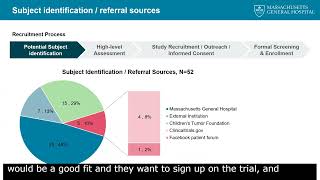
CTF Webinar Series — NF2 & Schwannomatosis
The Children's Tumor Foundation's multi-part webinar series with leading SWN clinicians and researchers — covering current care, pain, genetics, surgical decision-making, and the research pipeline.
Introduction and the State of Current Care
Overview of NF2-SWN and non-NF2 SWN — clinical landscape, diagnosis, and where care stands today
Watch →
Pain in NF2 and Schwannomatosis — Diagnostic Journey, Genetics, Management, Surgery
Panel includes Dr. Scott Plotkin, Dr. Larry Sherman (OHSU), Dr. Kimberly Ostrow (Johns Hopkins), Dr. Sheila Mansouri (U Toronto), Dr. Laura Papi (U Florence)
Watch →
Current and Future Targets — Research Pipeline
Therapeutic targets, trial design, and what is coming next for NF2-SWN and non-NF2 SWN
Watch →
Surgery vs. Treatment — Challenges and Choices
Surgical decision-making, watchful waiting criteria, and when to intervene
Watch →Expert Talks
Presentations from leading schwannomatosis clinicians and researchers — Dr. Scott Plotkin, Dr. Jaishri Blakeley, Dr. Vanessa Merker, Dr. Gareth Evans, and others.
Dr. Gareth Evans — Link Between NF2 and Schwannomatosis
Manchester criteria, University of Manchester
Watch →
ERN GENTURIS Schwannomatosis Guidelines
European Reference Network for Rare Hereditary Cancers — clinical management guidelines
Watch →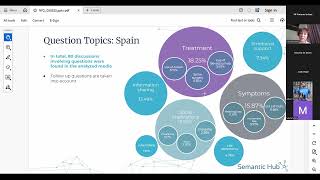
Understanding the Experience of Patients with NF2 and Schwannomatosis — Irina Efimenko
Patient-reported outcomes and lived experience research
Watch →
NF Knowledge Series: Diagnosed with Schwannomatosis
Watch →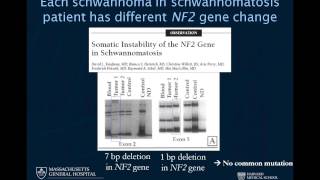
An Update on Schwannomatosis
Watch →
About the Rare Disease "Schwannomatosis"
Watch →
NF Forum 2016: Clinical and Imaging Manifestations in NF2 and Schwannomatosis
2016 — foundational imaging overview
Watch →
Understanding Peripheral Nerve Tumors
Watch →
How to Manage Peripheral Nerve Tumours
Watch →
Patient Stories & Voices
Patients living with schwannomatosis and schwannoma tumors — their diagnoses, their decisions, their lives.
Advocacy & Awareness
Patient advocates and CTF ambassadors raising awareness and driving action for the schwannomatosis and NF community.
2025 CTF National Ambassador — Leanna Scaglione
Watch →